Podcast: Play in new window | Download
Subscribe: RSS
Have you ever peeked into your crawl space only to feel like you needed a snorkel and a flashlight? In this episode of the Peskies Pest Control Podcast, hosts Michael Wienecke and Travis McGowin tackle the hidden nightmare happening beneath so many homes: poor lot grading, runaway runoff, and persistent moisture issues. They break down why modern building trends often make drainage worse, the costly risks of planting heavy landscaping right up against your foundation, and how standing water turns your crawl space into an open invitation for termites, camel crickets, and other destructive pests. Tune in to find out why proper water management is your home’s first line of defense against costly structural damage and unwanted intruders.
Podcast Transcript:
Michael Wienecke: How many houses do you think have poor irrigation—or not irrigation, but um, drainage—in Alabama? Just if you had a number. And I’d like to have like a irrigation, or not—I keep saying irrigation, I’ll probably keep saying that, but drainage specialists, water specialists on on here to tell us, but I I would assume that it’s a lot.
Travis McGowin: Well, if you really look at look at the houses that we go to, it seems like more and more these days, you know, they’re they’re trying to sandwich and put houses in in very creative areas. Um—
Michael Wienecke: Oh, that’s a good point. Man, I saw one in Bluff Park the other day, and I just shook my head because the house is higher than the neighbor’s house, so all that water is just going to go pouring into that crawl space.
Travis McGowin: Right, it’s like uh, “Okay, well, you know, you bought this lot or you own this lot. Yeah, we’ll stick a house here no matter, you know, what the the cause or the cost or the repercussions for any of the other surrounding properties.” And and I I do though, I see they’re they’re sandwiching these houses, they’re sandwiching them on really weird grades and slopes, and I would definitely venture to say that the grading of the lot and the management of runoff is is not always appropriate, and we see that a lot around the outside of houses and then even underneath houses in crawl spaces as well.
Michael Wienecke: Oh, I mean, yeah. Well, I mean, they’ve got to put in more more drainage now, and I don’t think that I think they account for so much water, but unfortunately Alabama is uh, you know, it could snow tomorrow, or or it could be 105 degrees. So, we just have so much just change in weather, I I don’t think they account for the amount of water that we actually get, ’cause you’re seeing so many of these new homes with like these—I’m glad you said that about the grade, like these stair-stepper grades, and I mean water is going to go to the path of least resistance, so it’s just going to travel downhill. I’ve never understood that.
Travis McGowin: And I can’t even—
Michael Wienecke: Elaborate, please. Tell me.
Travis McGowin: (Laughs) I am not a contractor, so… Uh, but I can say that I have been underneath quite a few houses and in crawl spaces, and and you’ve been there as well, where you just you stick your head into the access and you’re like, “Oh god,” because—
Michael Wienecke: Put a snorkel on.
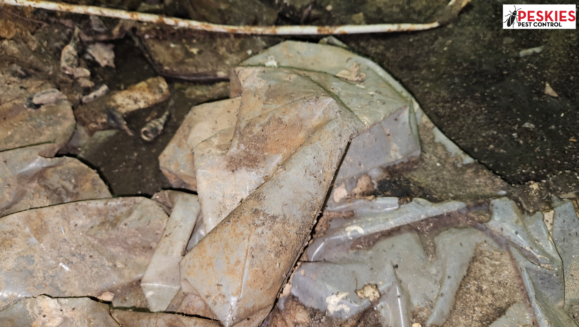
Travis McGowin: Yeah. Uh, if there’s not standing water, then it’s like a mud hole, or you know, you can even see where the water has carved its own pathway underneath some of these houses, and you’re like you’re just waiting because you know that it’s slowly eroding the dirt from underneath the house.
Michael Wienecke: Oh, yeah. I’m glad you brought that up. So, I I’d like to bring up something, too. Just um, would you would it is it better to have like bushes right up—like if you have a garden section next to your house or like a flower bed section, front, side, whatever it may be, would you recommend flowers there or like heavy heavy uh bushes, if it’s like right up against the house?
Travis McGowin: Mm, neither is mine (laughs). Because—
Michael Wienecke: Burn it all down! Burn it all down!
Travis McGowin: I I’ll be real honest with you, I’m very lazy when it comes to landscaping because the less that I have to fool with, the less lawn work has to be done, but I’m not a big fan of landscaping near the structure for multiple reasons. Um, I I’ve seen many times where landscaping holds moisture, uh it blocks sunlight, there’s no evaporation against the bottom of the structure, you end up with growth on the side of the bottom of the structure. And then not to mention, it’s a pest harborage area. If it’s not managed properly, it grows up against the side of the structure, it’s a pest pathway. There’s just so many different reasons why I think that there doesn’t need to be vegetation. And and I know everyone loves their beautiful vegetation and their lawn and landscape, but there’s so many reasons to not have it against your structure of your house.
Michael Wienecke: Well, I’m glad you said that, ’cause you know the big bush right by my front door?
Travis McGowin: Mhm.
Michael Wienecke: It’s gone. Well, it’s it’s going. It’s going.
Travis McGowin: I am so proud. Oh, oh, okay, I’m I’m so proud.
Michael Wienecke: That’s a big root! Whoever put that there, I I just I’m with you, I the less is better sometimes, you know?
Travis McGowin: Absolutely. Like I said, pest harborage area, moisture harborage area, um and then not to mention—
Michael Wienecke: Termites, I mean, just flow, water, water, too.
Travis McGowin: Well, depending on the species of shrub or tree that it is, I have even seen some people that I presume when they built their house, they were like, “Oh, it’s a great idea, we’ll leave this tree right here.” And then—
Michael Wienecke: Crape myrtle.
Travis McGowin: (Clears throat) We’ll we’ll say crape myrtle just because you said that, but years down the road, the crape myrtle has grown up and it’s, you know, rubbed a hole in the side of the eave of the structure because it hasn’t been managed properly. Or if it’s some other type of tree, I have seen where it’s grown up so large uh next to the base of the foundation of the house that it is actually like pushed the foundation, pushed the brick, or pushed the siding or whatever in the house and has actually started to damage the base of the house as well.
Michael Wienecke: Yep, I would 100% agree. Um, just not a good idea. You know, some small small bushes, I I’d be okay with that, with some shallow roots, but just do your research. I wouldn’t, you know, plant an oak tree right up to my house. Not a good idea.
Travis McGowin: Yeah, but ultimately, we’ve we’ve harped on the the lack of moisture management around the house and underneath the house, but you know, what we really need to talk about as well is why this is important. Like, why is managing all of this important from a pest control standpoint? And I think one of the major ones that people fail to realize uh is is termites, for starters. I mean, that is a huge one right there.
Michael Wienecke: Oh, so so big. Well, that’s what I that’s why the why, I’m glad you said the why. The why is is why are they building homes this way? ‘Cause I don’t know. I don’t know why they’re layering it down, but to me, if you’ve got a a home that’s being, you know, tiered down on a stair-stepper, and then like you said, they’re all being slabs now, I don’t think crawl spaces are are really a thing anymore that are being built.
Travis McGowin: Uh, I see it occasionally, but it’s definitely not as um not as normal as it used to be back in years past.
Michael Wienecke: Is that more of a Montgomery thing, or?
Travis McGowin: There’s a lot of older homes in Montgomery that have them. Um—
Michael Wienecke: But the new homes are not being built, no new homes.
Travis McGowin: Vast majority of the ones that I see now in our area do not have crawl spaces. Not saying that they all don’t, but a large amount of them don’t anymore.
Michael Wienecke: Gotcha. It seems like even builders aren’t doing uh underground basements very much. It’s kind of hard to Everything’s kind of ground level and then going up. So—
Travis McGowin: And I mean, basements can be a significant issue, too, if moisture is not managed properly.
Michael Wienecke: Tell me about it. Tell me about it. My second house, we’re we’re still dealing with that. So, um, yes, and slab homes make it even even worse for termites, because again, the the way they get in is is just uh harder to see.
Travis McGowin: Uh, exactly. So, I mean, you and I have talked plenty of times about termites and how, you know, the foundation of a house settles over time. Of course, the increase in moisture, and especially if it’s eroding the ground underneath the foundation, if that’s an issue, then obviously, I think that you’re going to end up with a risk of having more structural settling, more cracks in your foundation, and cracks in foundations make easy easy access points for termites. I mean, they can fit through uh a crack the size of a credit card, and I know we’ve said it multiple times on this podcast in different episodes, but um, not only termites there, but especially in crawl spaces, moisture high moisture content is going to be a big thing for a lot of bugs. You know, we talked the other day about um different species of flies breeding in the standing water. How many times have you been underneath a crawl space and seen large cockroaches running around under there, especially in a damp and moist location? Um, other high-moisture insects: crickets, silverfish, earwigs, um especially, you know, those types of things. I mean—
Michael Wienecke: Camel crickets.
Travis McGowin: Oh, uh man, all the time. All the time, people underneath it. But uh, you know, high moisture content, (chuckles) high moisture content is going to, you know, create a place that they want to stay and they want to be, and then, in turn, eventually, they’re coming to your house, in into the living space as well.
Michael Wienecke: Well, yeah, and I mean, so let’s talk about the water itself, because even your like your house when it fills up, just picking on you for a minute, your backyard’s like a bowl right there, you know? It just fills up and it’s it’s like a second swimming pool.
Travis McGowin: (Laughs) Yeah. In years past, the if you were standing at the front of our property, the right side of the property was really, really bad, and in very significant rain events, because we’re lower than some of the properties around us, we do get a lot of runoff from other properties, but I will say we we did take some trees out in in years past, and and that seems to help it dry and it seems to have helped it a lot. So, but yes, our our property being the elevation is different, we we do get an extreme amount of runoff, um thankfully—
Michael Wienecke: Not into the house, though, yeah.
Travis McGowin: No, right. (Clears throat) Thankfully, at this point, all of that usually goes around either side of the structure, and and trust me, there have been some significant rain events that I have wondered if it would creep up to the house, and and it did not.
Michael Wienecke: Trench it! Trench it!
Travis McGowin: Yeah, I mean, sandbags, you know, whatever.
Michael Wienecke: God, my Bluff Park house, man, I’ve been there, done that. That’s uh horrible.
Travis McGowin: I remember because your house had the sloped driveway, and I mean, it was like everything from the street and the driveway ran straight toward your garage.
Michael Wienecke: And again, I’d like to ask builders why they did that. Like my house now, it it’s still the the ground is higher than than the home, and having to divert water around the outside and driveway and all that kind of stuff, it just doesn’t make sense. I feel like it should all be that Dr. Seuss, where it’s all big humps and they’re sitting on top of the hill, you know, no water, everything shedding off. Um, but—
Travis McGowin: Exactly. But again, it comes back to lot availability and lot line, and sometimes, I mean, hey, we’ve got X amount of parcels or lots in this one neighborhood, we have to build, so here we go, we’re going to put houses wherever we can put them.
Michael Wienecke: That’s true. Well, it’s just to me it should be I feel like a house should be up on a hill and everything should be running off that house, and it should make it for easy drainage. But again, like you said, no houses. But I’m seeing it more and more. Every house I go to has got, (clears throat) you know, unfortunately, gutters clogged. That’s a huge one, ’cause if your gutters are clogged, it’s running over the side, it’s it’s ruining the soffit, it’s ruining the fascia, it’s also getting all over—it’s not doing what it’s intended to do, and it’s it’s just also backing up the um the drainage there.
Travis McGowin: Yeah, and there’s there’s no denying that moisture moisture causes a massive problem, especially when it’s allowed to sit and it’s not managed properly.
Michael Wienecke: Well, and then you can have other issues, like your house starting to sink, or you’re starting to, you know, um I don’t remember the name, bio- biopheasance or something? It’s like where the uh the water breaks down the uh the block and it turns into almost like powder.
Travis McGowin: Mmm. Could cause a problem.
Michael Wienecke: Yeah, I’m You have to look that word up, I’m not going to do it, but it’s it’s something like that.
Travis McGowin: Yeah, I don’t think I’ve ever heard that one.
Michael Wienecke: Yes, I learned it from a crawl space company. But um, again, water can do a lot of damage to the home.

Pingback: The Hidden Danger Beneath Your Home: Why Crawl Space Drainage and Pest Control Go Hand in Hand - Peskies Pest Control