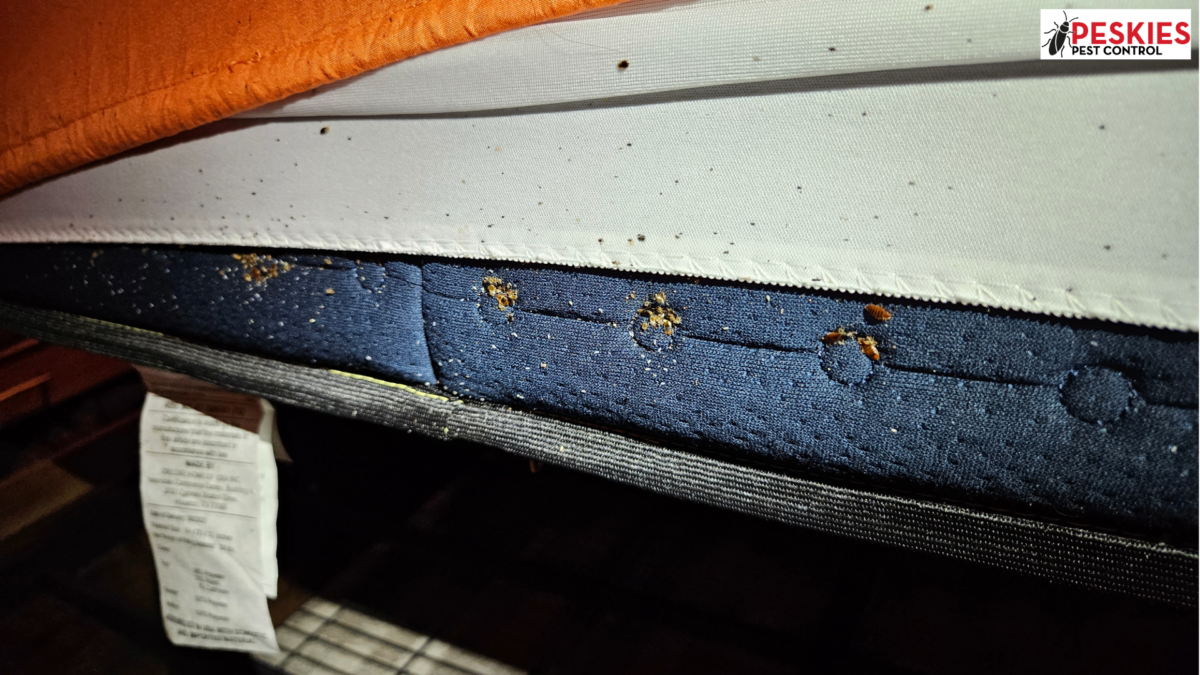
When people realize they have bed bugs, their gut reaction is sheer panic. On a recent job in Montgomery, Alabama, a homeowner told our team point-blank: “I will burn this house down if we can’t get rid of these bugs.”
It is completely understandable. The itching, the lost sleep, and the stress can drive anyone to extreme measures. But before you panic—or reach for dangerous DIY fixes—know this: you don’t have to burn your house down to get your home back.
In this guide, Michael Wienecke and Travis McGowin from Peskies Pest Control break down why bed bug cases are surging, why store-bought sprays and heaters won’t cut it, and how industrial heat treatments eliminate an entire infestation in a single day.
Why Bed Bug Infestations Are Rising
Bed bugs are world-class hitchhikers. Many homeowners assume an infestation is tied to cleanliness, but that is a persistent myth. Bed bugs do not care if a house is spotless or cluttered; they only care about finding a warm host.
Infestations typically spike during and after peak travel windows (especially October through December):
Holiday Travel: People visiting family or staying in packed hotels and Airbnbs.
Large Group Rentals: Shared mountain cabins and vacation homes where dozens of guests cycle through each season.
Overnight Houseguests: Visitors can unknowingly transport bed bugs in coats, purses, and luggage.
Delayed Discovery: From the moment a single fertilized female or nymph enters your home, it typically takes 1 to 3 months before the population grows large enough to be noticeable.
5 Practical Inspection Tips for Travelers
An ounce of prevention is worth a pound of cure. When staying in hotels, rentals, or even guest bedrooms, run through this quick 5-minute checklist:
Keep Luggage Elevated: Never toss suitcases onto the bed, carpet, or fabric chairs. Put luggage on the metal rack, hang clothes in the closet, or temporarily place bags in the bathtub while you inspect.
Check the Seams & Headboard: Pull back sheets to check the mattress piping, corners, and behind the headboard for live bugs or dark fecal spots.
Inspect the Window Curtains: A major hotspot people overlook is the top of window curtains near the rod and down the pleats closest to the bed.
Spot Shed Skins: Bed bugs molt as they grow. Finding translucent, insect-shaped “cast skins” in crevices is confirmation of activity.
Use Interceptor Cups: Frequent travelers can pack bed bug interceptor cups to slip under bed legs, catching bugs before they climb.
Why Chemical Sprays Fail Against Bed Bug Eggs
A major issue with traditional liquid chemical treatments is biological: no standard residual chemical reliably penetrates the protective casing of a bed bug egg.
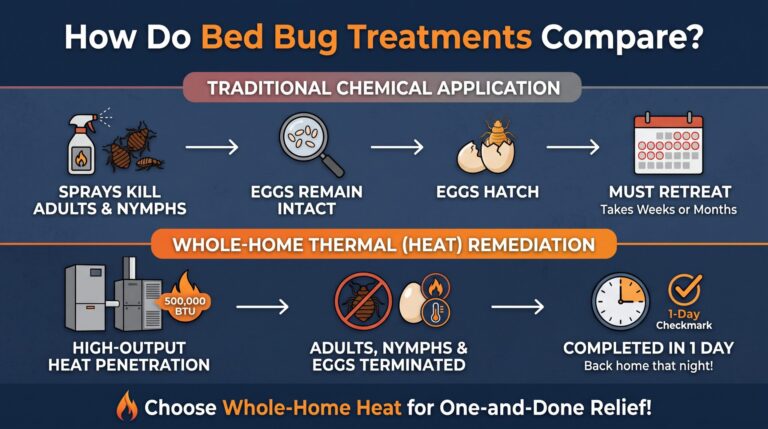
With chemical sprays, technicians must wait for eggs to hatch before a second or third treatment can kill the new nymphs—meaning weeks or months of living with an active infestation. Heat eliminates that waiting game.
The Science of Heat: Why Space Heaters Don't Work
A common DIY mistake is trying to heat a room with consumer space heaters. Store-bought space heaters either shut off automatically for safety long before reaching lethal temperatures, or worse, they become extreme fire hazards. Furthermore, uncirculated heat merely warms the outer surfaces, causing bugs to flee into wall voids and baseboards.
Professional thermal eradication relies on controlled convection:
500,000 BTU Commercial Systems: Using specialized exterior propane-fired heating units (like GreenTech Heat systems), high-volume forced air is ducted directly into the home.
Closed-Loop Recirculation: Instead of pumping air in and creating positive pressure that pushes heat out of window gaps, air is pulled from the opposite side of the home and reheated. This works like an industrial convection oven, maintaining sustained, even heat.
Thermal Vortex Circulation: Specially positioned air movers swirl heat into a vortex across every room, forcing lethal temperatures (130°F to 150°F+) deep into mattress cores, box springs, couch cushions, and baseboards.
Bonus Deodorization: As an added benefit, high-temperature thermal remediation causes rapid off-gassing that lifts deep-set odors, including smoke and pet smells.
What Treatment Day Looks Like
Whole-home heat treatment is designed to minimize disruption, giving you an insect-free home by the time you go to bed:
| Step | What the Team Does | Homeowner Preparation |
| Morning Setup | Technicians position ductwork, commercial propane heaters, and interior vortex fans. | Remove heat-sensitive items (pressurized cans, candles, cosmetics, wine, pets). |
| Alarm Coordination | The thermal air movers kick up dust that can trip smoke sensors. | Call your alarm company to put monitored smoke alarms on “test mode” for the day. |
| Thermal Eradication | The home is brought to 130°F–150°F+ and held for several hours to ensure complete penetration. | Vacate the property during the heat process. |
| Cool-Down & Re-entry | Equipment is removed and fans cool the structure back to comfortable levels. | Return that evening to a pest-free home. |
Fast, Guaranteed Bed Bug Relief
You don’t have to throw away your furniture or suffer through months of repeated chemical sprays. With professional heat remediation, your home is restored in a single visit, backed by our 90-day warranty and 100% satisfaction guarantee.
Suspect bed bugs in your home or rental? Contact the team at Peskies Pest Control:
Birmingham Area: (205) 470-8161
Montgomery Area: (334) 595-9055
Convenient financing options available for qualifying homeowners.