Dealing with bumps in the night is stressful for any homeowner, but for one of our elderly clients, it became a genuine safety concern. What started as a suspected “rat problem” quickly escalated into a high-stakes wildlife removal situation.
Here is the breakdown of how we handled a stubborn raccoon and why you should never ignore noises in your attic.
Our client called us after hearing heavy scratching and movement late at night. Having dealt with rodents in the past, she assumed the rats had returned. However, the signs pointed elsewhere:
The Attic Discovery: Upon opening the scuttle hole, we didn’t find small droppings. We found raccoon latrines (large piles of feces), a clear indicator of a much larger intruder.
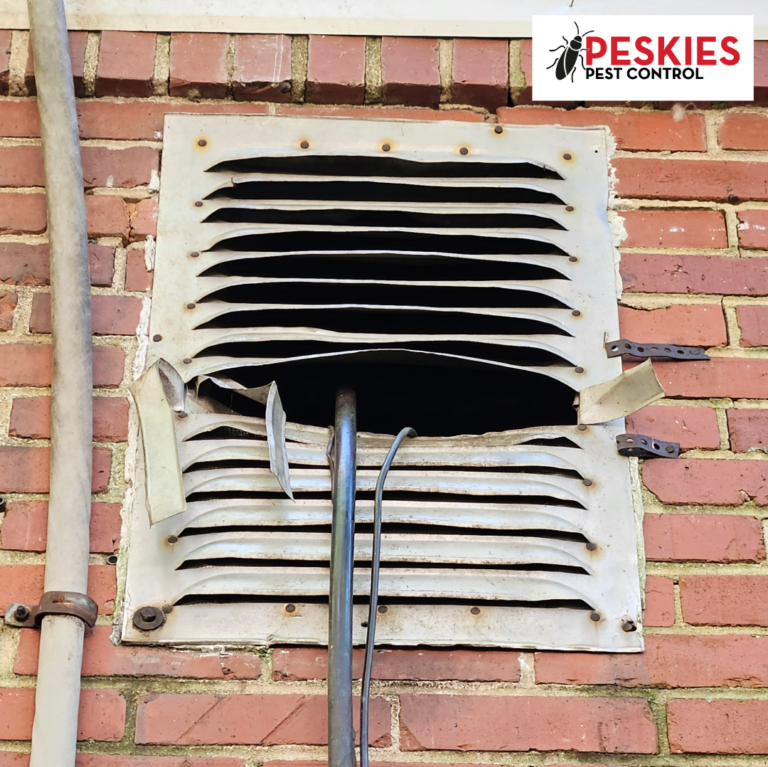
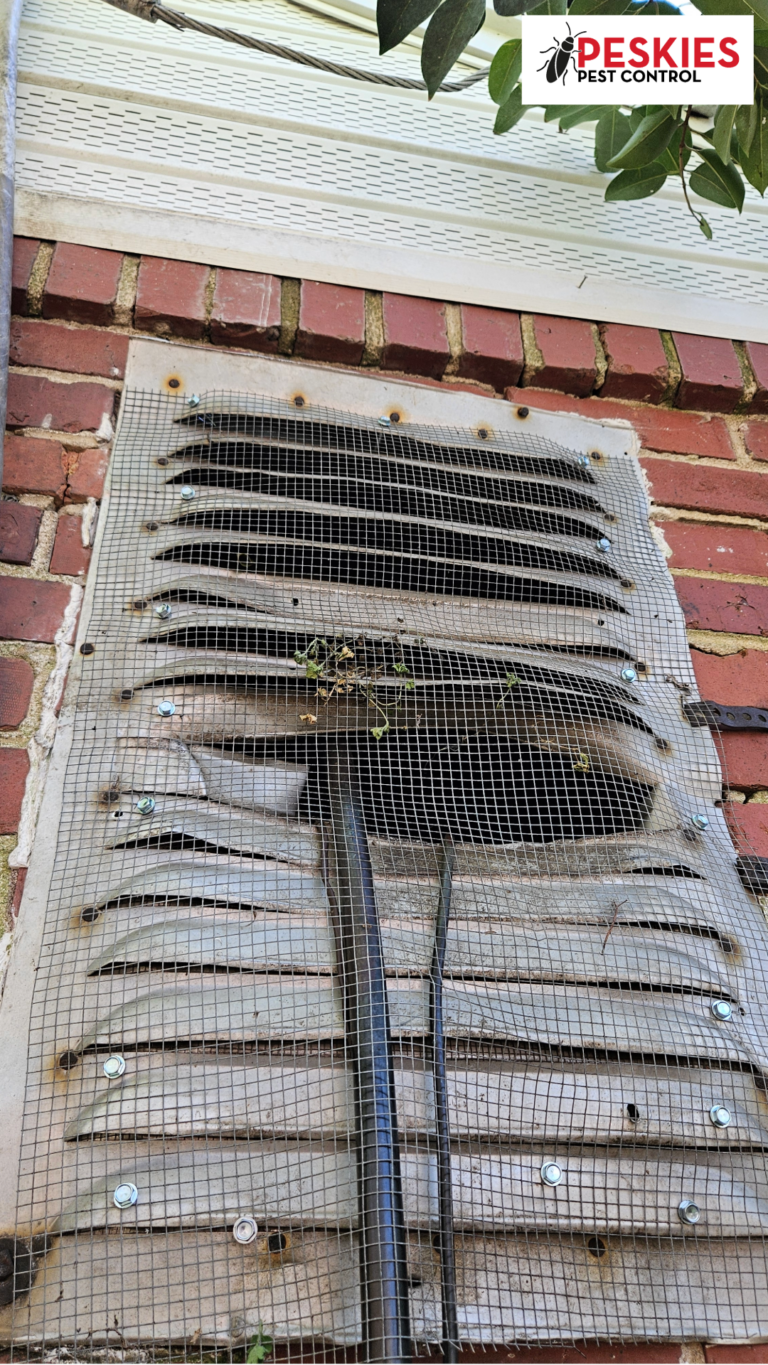
The Entry Point: A physical inspection of the exterior revealed the raccoon’s “highway.” It was climbing an HVAC coolant line on the side of the house to reach a gable vent, which it had pried open to enter the attic.
The raccoon was climbing up this HVAC line and entering the attic through this damaged vent.
The Challenge: Outsmarting a Bandit
Raccoons are notoriously clever. Our initial approach was a humane live trap placed near the HVAC line.
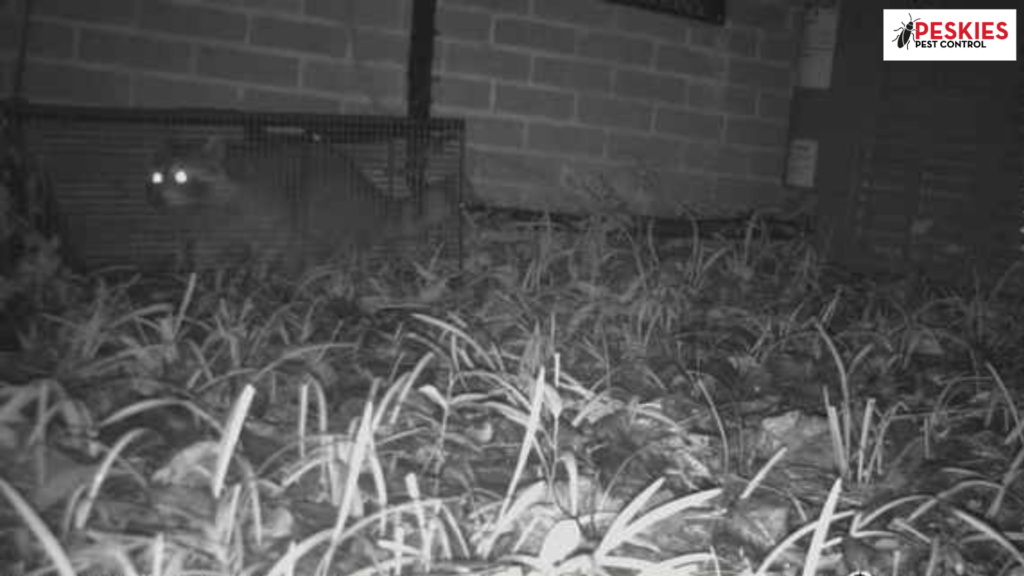
The Result: The raccoon managed to enter the trap, eat the bait, and exit without ever triggering the plate. It was a classic “dine and dash,” proving just how light-footed these animals can be.
The raccoon entered the cage, stole the bait, and left without setting off the trap.
Escalating the Situation: A Midnight Scare
A few days later, the situation turned urgent. Our client called in a panic; the raccoon was scratching aggressively at the attic scuttle hole cover, attempting to push its way directly into her living quarters.
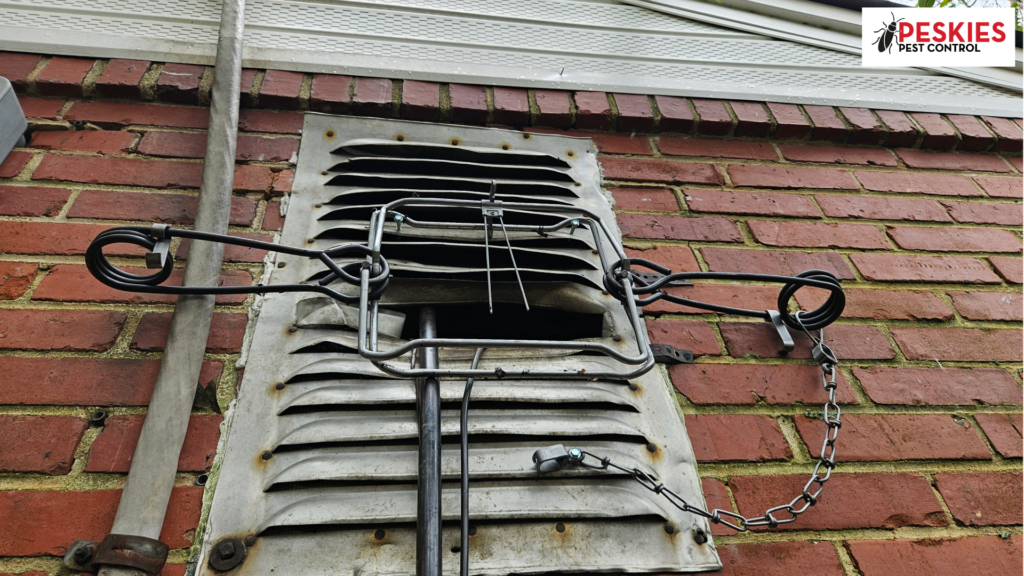
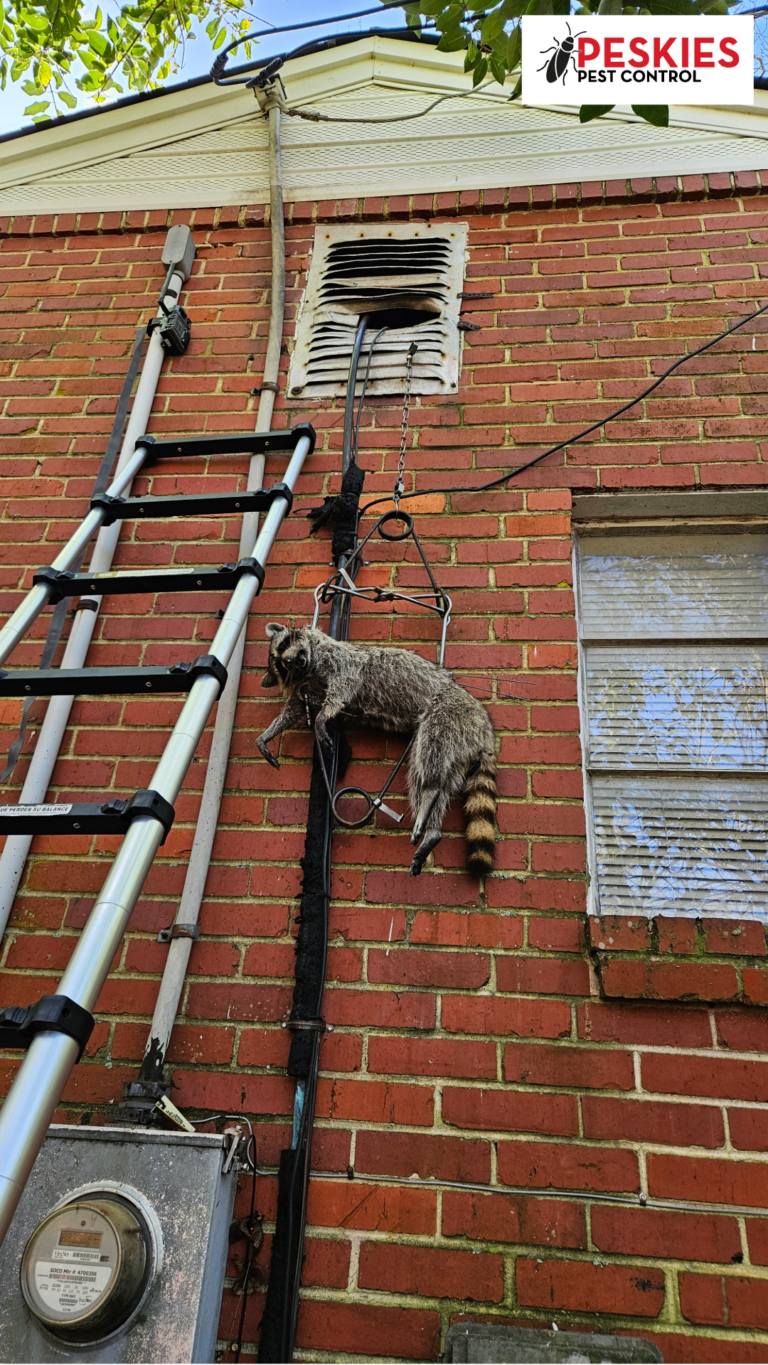
When a wild animal attempts to enter the inhabited parts of a home, the risk of a dangerous physical encounter—especially for an elderly resident—increases exponentially. To ensure the client’s immediate safety, we shifted tactics and installed a Conibear trap at the entry point. This specialized trap ensures a swift, lethal capture for animals that have become a direct threat to human safety.
The Outcome: We successfully caught the raccoon, secured the home, and provided our client with much-needed peace of mind.
Why Raccoons in the Attic are a Major Hazard
It isn’t just about the noise. Having a raccoon in your home poses several serious risks:
1. Health Risks (Raccoon Roundworm)
Raccoon feces can carry Baylisascaris procyonis, a roundworm that can be fatal to humans if spores are inhaled or ingested. They also carry leptospirosis and rabies.
2. Physical Damage
Raccoons are powerful. They can:
Tear through shingles and heavy mesh vents.
Destroy insulation, reducing your home’s energy efficiency.
Chew through electrical wiring, which creates a massive fire hazard.
3. Parasites
Where there are raccoons, there are often fleas, ticks, and mites that can migrate from the attic into your living room.
The vent was excluded to prevent future wildlife entry.
Protect Your Home Today
If you hear heavy thumping or scratching in your ceiling, don’t wait for the animal to find a way into your bedroom.
Is your attic making noise? Contact us today at (205) 470-8161 for a full inspection and professional wildlife removal service. We don’t just catch the intruder; we find the entry points and seal them so you can sleep soundly again.
 Tap Here To Call Us Now!