When October rolls around, porches fill up with carved jack-o’-lanterns, plastic skeletons, and fake spiderwebs. But while Halloween turns creepy crawlers into festive fun, the real pests lurking around our homes and businesses are far more unsettling than any costume.
In a recent episode of the Peskies Pest Control podcast, hosts Michael Wienecke and Travis McGowin sat down to discuss everything from blow-up Buzz Lightyear costumes to real-life insect nightmares. More importantly, the conversation turned to a sobering question: What would our world actually look like without professional pest control?
As Michael put it, it would look like “Halloween every day.”
Here is a closer look at the creepiest insects our technicians have encountered, the historical ties between pests and public health, and why professional pest management is essential for keeping modern life safe.
Real-Life Nightmare Fuel: The Dobsonfly and Giant Earwigs
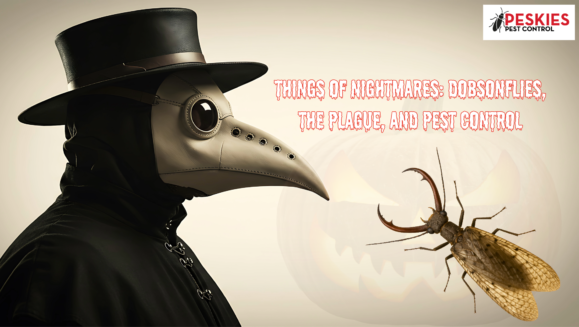
When asked about the scariest insect he has encountered in the field, Travis did not hesitate to name a bizarre, winged creature that looks like it escaped from a laboratory: the dobsonfly.
Found most frequently near aquatic environments like lakes, rivers, and streams, dobsonflies boast prominent wings and intimidating, oversized pincers protruding from their heads. While they might look like a cross between a praying mantis and a mayfly, seeing one in the wild—especially when you don’t know what it is—is enough to make anyone freeze in their tracks.
For Michael, the scare factor hits closer to home with common household pests: earwigs and centipedes.
“If earwigs were a foot tall, they’d be a force to run into.” — Michael Wienecke
While centipedes and millipedes are often beneficial predators in natural ecosystems, their eerie movements, venomous stings, and sheer appearance give them high billing on the list of real-world “monsters.”
A Grim History: What the Black Plague Teaches Us About Pest Management
To illustrate why pest management is about far more than just getting rid of an annoyance, Travis shared a quick history pop quiz:
What caused the spread of the Black Death across Europe between 1346 and 1353?
The answer isn’t just “the rodents.” The true vector was fleas carried by infected rodents.
The resulting bacterial infection claimed an estimated 50 million lives—wiping out nearly 50% of the entire European population in less than a decade. In that era, poor public hygiene, lack of sanitation, and an absence of pest management allowed rodent populations and the parasites they carried to multiply out of control.
Even modern childhood culture carries echoes of this era. As Travis pointed out, the common nursery rhyme “Ring Around the Rosie” is widely believed to mirror the plague’s devastating symptoms and fallout:
“Ring around the rosie”: The distinct red skin rashes associated with the infection.
“Pocket full of posies”: Herbs and flowers carried by people (and stuffed into the beaks of plague doctor masks) in hopes of warding off foul odors and disease.
“Ashes, ashes / We all fall down”: The widespread burning of contaminated belongings and corpses, followed by mass casualties.
Why Pest Control Is Essential Public Health & Property Protection
Pest management technicians do much more than eliminate bugs; they act as a front-line defense for communities. Without professional management, modern society would quickly face severe crises across three core areas:
1. Public Health Defense
Pests such as roaches, rats, and mice are major disease vectors. In homes with severe infestations, cockroach allergens can trigger chronic asthma and allergic reactions, especially in children.
Furthermore, rodents and insects regularly crawl through sewers, trash, and filth before tracking contaminants across food preparation surfaces and countertops. This contact spreads dangerous pathogens, including:
Salmonella
E. coli
Hantavirus
2. Safeguarding the Food Supply & Economy
Pesticides and integrated pest management (IPM) are fundamental to crop security. Without targeted management against weevils and other destructive insects, agricultural yields would plummet. Post-harvest, rodents and insects can spoil tons of stored grain and food supplies, leading directly to food shortages and massive economic disruption.
3. Structural & Property Protection
Termites alone cause billions of dollars in structural damage every year—causing more total financial damage annually than all natural disasters combined.
Myth Buster: Having a brick home or a trailer does not make you immune to termites. As Michael and Travis noted, termites feed on structural wood framing, flooring, and trim, easily bypassing metal or exterior masonry to reach cellulose materials inside.
Rodents also present severe fire hazards by gnawing through electrical wiring inside attics and crawlspaces.
The Post-Halloween PSA: Don’t Let Rotting Pumpkins Invite an Infestation
With Halloween wrapping up, the team left listeners with one practical piece of advice: get rid of your carved pumpkins.
Many homeowners enter and leave through side doors or garages every day, meaning carved porch pumpkins sit outside the front door forgotten for weeks.
After about two weeks on a porch, a rotting pumpkin becomes a magnet for:
Fruit flies, gnats, and houseflies
Roaches and beetles looking for decomposing organic material
Rodents seeking an easy food source right next to your home’s entry points
To protect your home, dispose of carved pumpkins promptly after Halloween. Throw them away in an outdoor trash bin, compost them far away from the house, or feed them to chickens or local wildlife well away from your foundation.
Protect Your Home with the Pros
The pests that bump in the night don’t vanish when October ends. Whether you are dealing with seasonal invaders, nuisance insects, or need preventative termite protection, professional pest control is key to keeping your home healthy and structurally sound.
Contact the team at Peskies Pest Control at (205) 470-8161 today to schedule an inspection and keep your home safe from life’s real nightmare creatures!