Podcast: Play in new window | Download
Subscribe: RSS
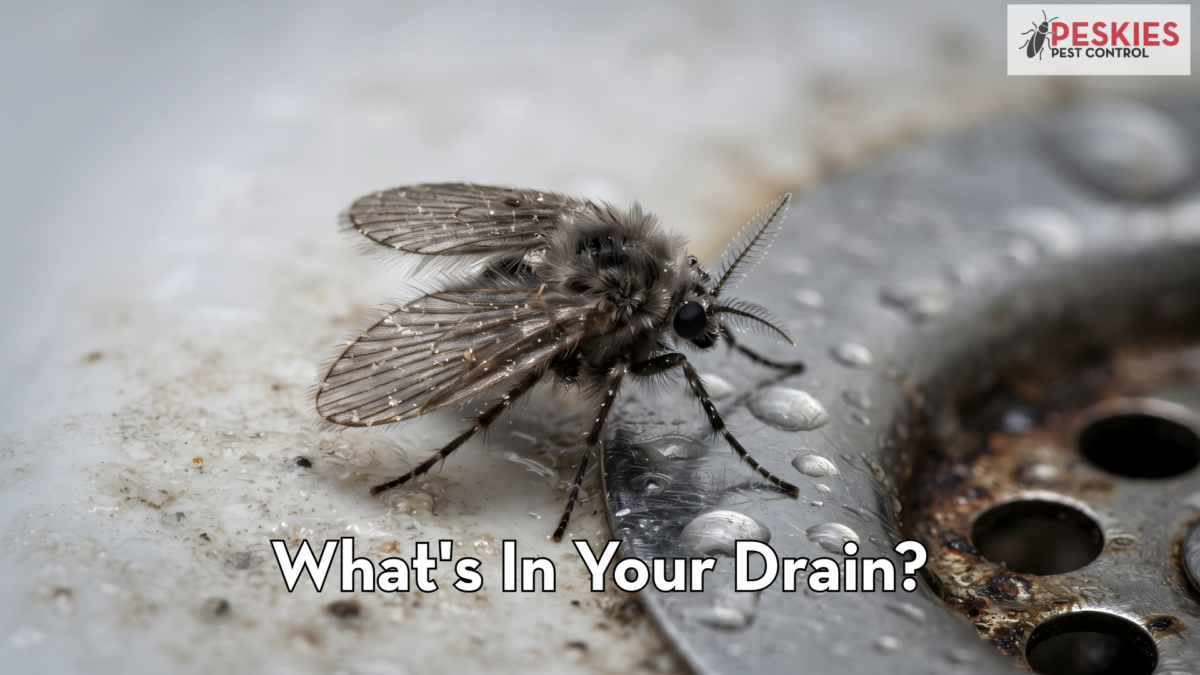
In this episode of the Peskies Pest Control Podcast, hosts Michael Wienecke and Travis McGowin dive deep into the murky world of household plumbing to answer a simple yet unsettling question: what’s in your drain? From hair-clogged shower drains and dried-out guest toilets to hidden breeding grounds in garages and commercial kitchens, they uncover the real causes behind pest infestations like drain flies and fruit flies. Tune in to discover why bleach isn’t the quick fix you think it is, how structural plumbing issues can trigger surprise fly surges, and practical steps you can take to keep your drains clean and pest-free.
Podcast Transcript:
Michael Wienecke: So what’s in your drain, Travis?
Travis McGowin: Probably moisture, crud, and buildup, I’d have to guess.
Michael Wienecke: I would have much rather heard “which drain,” because I have multiple different ones.
Travis McGowin: Well, I mean, that too. I mean, obviously, there’s, you know, drains everywhere in your house—bathrooms, kitchens, laundry rooms… Sometimes people have them in their garage. I mean, there’s, you know, potential for drains to be in quite a few places.
Michael Wienecke: And in our line of work, we see a lot of things in drains that shouldn’t be in drains.
Travis McGowin: (Laughs) Absolutely! I mean—when you get right down to it, when you think about drains, you think about bathtubs and sinks. That’s probably about as far as your mind goes, but if you really wanted to get to the reality of it, toilets are drains too.
Michael Wienecke: That’s very true. That’s very true. I was thinking more of a shower drain, and if you’re married or, you know, have a sister or what—if they’re, you know, most…
Travis McGowin: Anyone with long hair.
Michael Wienecke: Anyone—(laughs) I think women because my wife, but my shower—my shower drain has—has hair all—all in it.
Travis McGowin: Oh, yeah. And it—it’s amazing how quickly it builds up. And, you know, no offense to my wife or any other female, but sometimes it’s like, “Dear Lord, how are you not bald?”
Michael Wienecke: It just keeps on growing, man! I—I don’t—I’ve often thought that myself. But, you know, with hair in that drain causes a lot of issues, other than just, you know, gagging while you’re cleaning it out.
Travis McGowin: Oh, it always has a very nice, pungent odor to it when you pull it out of the drain.
Michael Wienecke: It’s so funny watching—like, I’ve seen videos of people, you know, trying to be manly and take it out of the drain; they’re just like about to just lose it.
Travis McGowin: Gag—gagging the whole time. (Laughter) It is, it’s gross. It’s gross.
Michael Wienecke: As firemen, we’ve seen a lot, so I feel like—I feel like we can handle a lot. But hey, on—on a side note, since we’re talking about gagging, we just got a puppy, and—and it—it used the bathroom in the garage this—this morning. So when I went in there, I—I almost lost it. And I was like, I guess I’m just getting old, I don’t know.
Travis McGowin: Was it like, the smell permeated the entire room?
Michael Wienecke: Yes! Well, it—I guess it’d been sitting there since, you know, whenever it did. And it was just like, “Oh!” It just hit me in the face. But… Now we have flies, you know? Had to take care of that today.
Travis McGowin: So, you know, with drains—and we’ll—we’ll harp a little more on the shower drains and, you know, hair buildup in the drains. I’m sure you’ve been in this position where you pull the drain cover off and you go to pull the hair out, but like, it’s literally not just hair. It’s this very long, just—it’s like it keeps going and going, and it’s like whatever hair you had, and then whatever growth is on that and buildup is on that, it—it just stretches like way down into the drain. Um, you know, the dead giveaway sign for us is when it starts to back up and not drain properly while you’re using your shower, and then inevitably you pull the cover off and it’s just like this long growth buildup with hair and all manner of other mess on it. But I mean, think about any drain.
Michael Wienecke: You’re painting an amazing picture.
Travis McGowin: I know, right? I—I should’ve taken a picture—I’ll take a picture next time and send it to you.
Michael Wienecke: We—we have plenty of video footage of drains. Plenty.
Travis McGowin: But moisture—moisture’s the, you know, to me—obviously you got matter and—and items that get put into a drain, but moisture is to me the key ingredient, and it’s—it’s always gonna be there. I mean, drains have moisture in them by design, constantly.
Michael Wienecke: Well, and the problem is moisture or lack of moisture can bring on problems.
Travis McGowin: Right. So I’ve—I’ve seen it both ways. I’ve seen where, you know, the moisture sitting in the drain along with some organic material of some sort has caused a buildup, and then you end up with some sort of flying insect that gets down in it, and they start to breed and—and, uh, you know, set their larvae in there and just really go to town on making that a habitable place for them. And then I’ve seen on the opposite end of the spectrum where a drain or a—a toilet or what have you doesn’t get used on a regular basis, and so eventually that water evaporates out of it, and then whatever is beneath or behind that drain has fair room to come up the drain and into the living space of the house.
Michael Wienecke: Oh man, we did a house in Mountain Brook years ago, and it was a—a renovation. And the guy—we—he hadn’t used the upstairs—the entire upstairs—in forever, and all of a sudden one day opens that door and millions—millions of them. It took—it took about six treatments to get it—get it gone.
Travis McGowin: Yeah, I’ve even had a customer that has guest—you know, guest rooms with guest bathrooms in their house, and obviously, you know, have not had anyone come to stay with them in a while, and so the bathroom was just kind of overlooked—you know, out of sight, out of mind. And I went in there to treat, um, on a regular service, and I’m like, “What are these all over the floor, the window sill, and everything?” And it was literally little like drain flies or phorid flies, whatever—it’s been a while, so I don’t remember exactly what it was, but the toilet was completely dry. There was no water in it, and it just had completely evaporated out. And so they were able to go back and forth down into that drain, and of course, this is out in the—out in the county, so there’s no sewer or anything, it’s septic system. And I’m sure they were just able to go and make their way down in there and breed and do whatever they wanted to do.
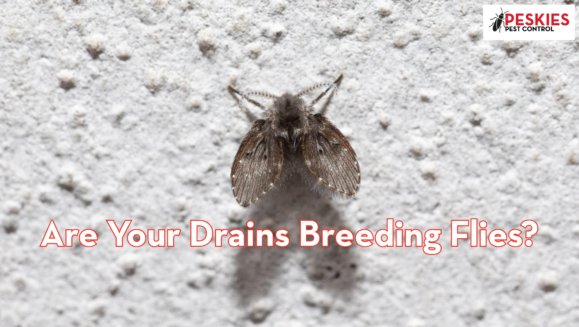
Michael Wienecke: Drain flies are the most disgusting, cute thing buzzing around in the air. (Laughter)
Travis McGowin: I’m assuming when you say “cute,” you’re referring to the owl midge, if I—if I had to guess. With furry wings…
Michael Wienecke: No, no, no, drain flies have like—the bunny—the bunny ear wings.
Travis McGowin: Yeah, the little fur—like the little furry-looking wings.
Michael Wienecke: Yeah, the drain fly.
Travis McGowin: Right. Those are a lot of times—they’re—they’re part of a midge family, though, and—and so if you look it up, and look up an “owl midge,” that’ll be what you’re looking at.
Michael Wienecke: They look kind of cute. You’ll have to show me exactly what you’re talking about.
Travis McGowin: Yeah, just go to Google and type in “owl midge.”
Michael Wienecke: Yeah, okay, owl midge.
Travis McGowin: Yeah, do it right now so the listeners can hear.
Michael Wienecke: I’ll—I’ll do it—I’ll do it later. I’ll do it later. I’ll take your word for it. But anyway, it’s a cute bunny ear little thing, but they’re disgusting because they come right out of, uh, the nastiest part of the drain.
Travis McGowin: Right. And they’re breeding down there, they’ve got their larvae down there, their food source down there. And—and then, of course, inevitably, they’re landing in it. And then they’re going and landing all over your surfaces and landing on you or—or everything else, so…
Michael Wienecke: Kind of like that YouTube video you did on the—the defecation in the—behind the parking lot.
Travis McGowin: That is a classic! I don’t care who you are, that’s a classic.
Michael Wienecke: It’ll never beat the squirrel video. (Laughter) So let’s talk about, um, something I’m seeing a lot of right now, and that is fruit flies. So I want people to understand that those fruit flies are not breeding on the fruit. They are breeding in the drains, in the garbage disposal… I mean, this whole thing’s about drains, so we could be talking about, you know, anything. Where are fish breeding? The drains—we’re talking about drains, gotta be the drains.
Travis McGowin: So—so it can—it can definitely be the drains. I—I would even take that one step further and go on to say anywhere with—with some moisture content. Um, I have had a customer in Montgomery that actually had them infesting her garage. And, yeah, and that was kind of strange because there weren’t any drains, there wasn’t any…
Michael Wienecke: A lack of drains. A lack of drain.
Travis McGowin: Yeah, so here’s what it was, though. I—I told her, I said, “Look, if you’ve got this many, there’s a breeding site somewhere. Like, there’s—there’s no way around it.” And she racked her brain for a minute, I—and, you know, she couldn’t come up with anything that she thought’d be a breeding site. And I said, “Well, do you mind if I inspect and look around?” And she said, “No, that’s fine.” So I start going through the stuff on the shelves in the garage, and I come to this Walmart bag that’s like, kind of tied up. And you know how it is when you find a breeding site, and you just touch it and open it, it’s like (whoosh sound), like, you know, here they come. And, uh, I don’t know what was in that bag because it had decomposed down to mush so much in that hot garage, but that was the breeding site. And—and she was mortified; she didn’t know what it was, and so, course, obviously we disposed of it, but she had no clue that it was even there.
Michael Wienecke: Sounds like a rodent got in there and died or something.
Travis McGowin: I don’t know, or she does plant a lot, and I don’t know if it was some kind of flower bulbs or something that had decomposed or—whatever it was, it was mushy and decomposed, and they were loving it.
Michael Wienecke: Did you taste it?
Travis McGowin: No. Uh, the odor was pleasant enough to know that I didn’t need to taste it.
Michael Wienecke: You gotta get the age, you know? It’s been here a while.
Travis McGowin: Is that—is that how you do it? I’m gonna need you to make us a video on how—how it is you age things by tasting them.
Michael Wienecke: Brody would’ve tasted it. (Laughter)
Travis McGowin: But yeah, it—she was—it started to where she was noticing them in her house, and then she went and purchased like fly tapes and stuck them all in the garage and caught a whole bunch of them on fly tapes, too, and it was just never-ending, could never get a hold of them. And that was why; she just didn’t eliminate the breeding source.
Michael Wienecke: Well, and I think it’s just important to say, you know, drains are used for one thing, but we’ve got to keep them clean. Um, and bleach is not the way to keep your drain clean, so let’s talk about some practices on just keeping a clean drain.
Travis McGowin: To—you know, like I said, drains are going to have moisture in them. Uh, I’ll pull from another experience that I had with a—a commercial-type kitchen in Montgomery at a place we service. And they had these, um, rubber floor mats with the circle holes in them, you know, the non-slip floor mats?
Michael Wienecke: Those are the worst for German roaches! We talked about that in the German roach podcast. Ugh, they’re horrible.
Travis McGowin: Yeah, they’re—they’re terrible for German roaches, for sure.
Michael Wienecke: For everything.
Travis McGowin: But what had been happening in that kitchen was, is they had stuck one of those mats down on the floor over the top of one of the floor drains. Um, and so the floor drain had like a box with, of course, like, um, a drain lid on it that would let moisture through, but then the drain itself sat down in this inset box in the slab of the building. And man, when I tell you—I probably still have pictures of it somewhere—but when I pulled, and finally found it, and pulled that rubber mat up and looked, and took the cover off, like, just the growth and the crawling and flying going on from that one drain. And I went and got the staff, uh, person who’s over the kitchen, and I was like, “Hey, I want you to see something.”
Michael Wienecke: They’re like, “Oh, we’ve never seen that before!”
Travis McGowin: And literally, that’s what it was, like, “I didn’t even know that drain existed.” And I’m like, “Yeah, well, the flies do.” And, uh, now ever since then, that drain has been completely spotless; they have kept it immaculate. But it was—it was a nasty mess when I pulled that back.
Michael Wienecke: Well, in restaurants especially, because things go down drains in—in there that they just, you know—there’s a lot going on in a kitchen, let’s just put it that way.
Travis McGowin: Oh, I mean, everything from food to, you know, stagnant, nasty mop water, to grease and—and that sort of thing. I mean, there’s, yes, there are all types of things that get pushed down into those drains. And—and then, you know, they—they—they get all that mess down in there, and then they don’t drain properly or completely like they’re supposed to, and I’m sure you’ve seen backed-up drains just like I have. I mean, it’s—and then of course, then odors start to develop, and then flying insects come, and it—it’s just a vicious, terrible cycle.
Michael Wienecke: Yeah, so I mean, the best thing is just get something that’s gonna eat away that organic matter down that drain, something that’s gonna be, you know, biodegradable and all that—all that.
Travis McGowin: Right, they make, you know, a plethora of different products that I guess have enzymes in them that will break down that organic growth and buildup in those drains. And ultimately, with the goal of obviously eliminating odors and, um, keeping flying insects from having a place where they can take up root and—and breed.
Michael Wienecke: Oh yeah. Well, and—and again, if it’s an issue, let’s talk about treatment, too. I mean, with—with us, we’re gonna put a—an adulticide and IGR down there. We’re gonna stop that complete breeding cycle as well as treating the current—the current flying issue. However, if it goes past that, you know, you get another issue after treatment, then we’ve got a drain issue, or we’ve got something way down there that needs to get addressed.
Travis McGowin: Yeah, I’ve even had a customer that had their slab in their house had shifted, and it cracked their master drain, their—their, um, PVC drain in the slab—it cracked it. And so, they were consistently having a fly problem in their house. We treated it, it got a little better, and then it came right back; we treated it, it got a little better—just a vicious cycle. And after a time or two, I—I ended up telling the customer, “Have you ever thought about the fact that you may have a plumbing issue?” And it was—it was like a lightbulb went off in his head. He was like, “It’s funny that you say that because we’re currently working with insurance to see, because we’re gonna have to get our slab busted up and get our master drain fixed because it’s cracked—they scoped it and saw that it was cracked.” And I said, “That’s probably where the hang-up is, where all that stuff that’s supposed to be draining is not draining, and you’re getting these flies.” And sure enough, they got the drain fixed, um, the slab fixed, and they haven’t had a problem since.
Michael Wienecke: I had a situation over off 280, and it was same situation. We treated, we treated, finally told ’em it was a drain issue. I got under there in the crawl space, took out the cleanout, shined a light, and you could see the bend, the bow of where the pipe had just—so it was—I’m sorry, it was bowing down, so everything was just sitting here, and you could actually see the crawlies, um—I call ’em crawlies, you know, the—the larvae just squiggling all around in there. And I was like, “Oh, well, we solved it without—without pesticide.” So they had got a plumber in and got it—got their—their pipe, uh, positioned in the right direction to drain, and they—it’s been solved ever since.
Travis McGowin: I even went underneath a house one time for a wood infestation inspection in the crawl space…
Michael Wienecke: I’ve been to a few of those.
Travis McGowin: Yeah, just a couple. And they actually did not know that they had one of their drain pipes underneath there leaking or dripping or something. And so there was a big puddle of moisture underneath the crawl space, and it—you talk about the crawlies—it was literally moving. There were thousands of larvae just squirming inside of this nasty, wet, stagnant pool under there, and I mean like I said, thousands of them. And I remember when I got back with the client that I was inspecting the house, I asked him, I said, “You ever had a fly issue before, drain flies, anything like that?” And they were like, “No.” I said, “Unless you get your crawl space issue fixed, you will… because they were already, you know, underneath the crawl space on like the subfloor and the floor joists and all those places.” And so I told him, I said, “Uh, you got a leak, and it’s got a pool of water that is breeding these flies. So if you haven’t seen any in your house, give it time, you will, and it’s gonna be bad.” And I don’t know if they ever got it fixed or not, but hopefully they did.
Michael Wienecke: They can just Delta Dust it every six months, it—it’ll be fine. (Laughter)
Travis McGowin: Yeah, let’s—let’s not solve the problem, let’s just Band-Aid—Band-Aid solutions!
Michael Wienecke: Oh, me! (Laughter)

Pingback: Are Your Drains Breeding Flies? Signs, Solutions, and Prevention Tips - Peskies Pest Control