Podcast: Play in new window | Download
Subscribe: RSS
In this episode of the Peskies Pest Control Podcast, Michael Wienecke and Travis McGowin dive into the seasonal “explosion” of squirrel activity and the havoc these bold climbers wreak on local homes. From chewing through electrical wiring—which can lead to dangerous structure fires—to tearing into gable vents and rooflines, the team discusses the serious risks and requirements involved in a professional eviction. You will learn how simple landscaping mistakes like untrimmed crepe myrtles provide a “bridge” for rodents and the tactical logistics required to successfully trap and seal out these persistent unwanted guests.
Podcast Transcript:
Squirrels in the Attic
Michael Wienecke: All right, so who wants something crawling around in their attic?
Travis McGowin: I know personally I hate crawling around in my attic, so I don’t know why anything would want to live up there in the first place. But far be it from me to tell wildlife that they can’t go in my attic, right?
Michael Wienecke: So we have seen just an influx of, uh, things in attics here recently and they’ve just been squirrels and I, uh, I mean it’s, it’s just been an explosion.
Travis McGowin: Yeah, ’tis the season. Um, and, and I feel like it’s like this every single spring realistically right there into that transition from winter to spring, it’s like they’re just on the prowl looking for someone’s house to get into.
Michael Wienecke: Or houses.
Travis McGowin: Or houses, that’s right. That’s right.
Michael Wienecke: Well, and what are they doing up there? Why are they tearing into gable vents and roofs and, and all, all kinds of places on people’s homes right now?
Travis McGowin: I mean, they’re looking for a place to start a family.
Michael Wienecke: They’re looking to move in rent free, huh?
Travis McGowin: Absolutely. Absolutely. They’re looking for a place to go and, uh, and nest and, and reproduce and, you know, take over the world one, one litter of squirrels at a time.
Michael Wienecke: I’ll tell you one thing that is crazy to me about squirrels all the squirrel jobs that we do, they are very bold. They’re just, they’ll just hang out with you in the attic while you’re looking for ’em or watching ’em. I mean we’ve got plenty of videos on that, but they just kind of hang out and some of ’em will run away but a lot of ’em are just bold and they’ll just watch you.
Travis McGowin: I think sometimes they think that they can’t be seen. Like they’re camouflaged.
Michael Wienecke: I always thought because they thought they owned the home. They’re like hey this is I’ve been here six months this is I’ve, you know, um, what do they call it squatter’s rights.
Travis McGowin: So, in order for us to effectively remove squirrels from someone’s attic do we need to go get an eviction notice from from some, you know, county entity?
Michael Wienecke: We do actually Travis it is, uh, it is the state license, the, the trapping license that we, that we have to get, uh, for the state. So yes, we do have to, we do have to do that.
Travis McGowin: Right.
Damage and Issues Caused by Squirrels
Michael Wienecke: Well, let’s talk about some of the damage that they do though. I mean, we have seen, I mean, we just did a really good video on one chewing right in the front of someone’s house and, and getting through the wood. Uh, I’ve seen a lot of chimney damage in the past, um, just a lot, a lot of damage on wires. I mean, it’s, it’s just something that you just don’t have to deal with. And it’s always where you can’t reach it and it’s always next to the power lines.
Travis McGowin: Um, you know, I think the perfect, more appropriate place to start in terms of damage and issues that the squirrels cause is really to kind of go and lead off with access. So, uh, first of all squirrels are really good climbers.
Michael Wienecke: Really, really good climbers.
Travis McGowin: Absolutely. They can climb textured surfaces like Spiderman. I mean realistically if your house has any kind of veneer made out of brick on it, um, even some types of siding, especially, you know, wood siding, rough cut wood, stuff like that, I mean they can climb like no body’s business. They have no trouble, um, going back and forth. And if you, you know, are fortunate enough to have some sort of surface on the outside of your house that is not textured that they can’t climb, then, you know, the next thing is they’ll climb a tree that is close to the eaves or close to the roof of the structure and they’ll just jump back and forth if they need to or if, you know, if that’s touching the roof or the eaves then they’ll just climb right, you know, back and forth and then, you know, of course we also see ’em running up and down power lines, uh, cable lines, um, more specifically cable lines to a house and I mean so there’s just so so many routes that they can get and take for their house, you or for to get into your house I should say.
Michael Wienecke: Oh definitely. I mean, I think a lot of people just deal with squirrels year to year like oh well they’re back or oh they’re, you know, stirring around again this time of year or before just because they think that there’s no way to get rid of them.
Travis McGowin: Oh, but there is. You know, there certainly is. Um, but you know the problem too is not only is it the access but if a squirrel doesn’t have, you know, the ideal entry point figured out, they’ll just make one.
Michael Wienecke: 100%. Well, I mean that goes, you know, to maintenance on the home making sure that, you know, I think we’ve talked about what is it a pound of, uh, a pound of cure gives an inch of pressure, pa-, prevention?
Travis McGowin: Oh no. It’s an ounce of prevention is worth a pound of cure. Oh gosh. I’m going to get on a shirt so I can remember.
Building Construction and Deterioration
Travis McGowin: But, you know, if they climb up the, the house or come across on a line or or, you know, enter the space of the house with a tree and you know there’s a small gap, I mean rodents constantly gnaw, they constantly chew on things. So if the, if the hole itself is not quite big enough, um, they’ll just make it larger. You know, they have no problem doing that. So whether it’s the hole near an eave or, you know, a vent, um, they’ll just, you know, make their own access sometimes if the access isn’t already there.
Michael Wienecke: Well let’s talk about building construction too. I mean, you know, you’ve got unfortunately skip corners, um, I don’t know when code was to put drip edge. I, I thought it was around 2000 but, uh, I, I see a lot of 2000 homes that do not have drip edge. So I mean you just see a lot of things that were missed. I mean we, we did some homes over here in Chelsea, uh, over here off Inverness and Hoover and Birmingham, you know, it’s just missing flashing and they’re just slipping right on those cracks and crevices, uh, during the, uh, you know, uh, between the roofline to the flashing.
Travis McGowin: Uh, well, and you know those houses too, some of them may not have necessarily started out with an issue in the area where the drip line, or excuse me, the drip edge was supposed to be installed. But what we see a lot of times is that over the course of the life of the house, you have the decking underneath the shingles starts to, whether it’s absorbing moisture, whether it’s, uh, you know, reacting to just constant heat from the sunlight, whatever it is it may be a little mixture of both. But it’ll start to bow up and what was a tiny gap that maybe wasn’t a rodent entry point, all of a sudden down the road becomes a rodent entry point because that wood starts to warp and, you know, and change its shape.
Michael Wienecke: Well it happens all the time. I mean like we talk about with wildlife squirrel work, raccoon work, bat work, whatever it can be it’s it’s creating that puzzle piece that that’s no longer there.
Hazards of Squirrels in Attics
Travis McGowin: Right. And so once they damage the exterior of your home to get in and they get into the attic, now what? What becomes the problem then? So now we’ve we’ve not only got a rodent that’s made entry into the home but what can they do in the attic that’s so detrimental to a house?
Michael Wienecke: Uh, well a couple things. I mean they’re going to urinate in that house, they’re going to pee in the house, um, they’re going to gather insulation. We’ve seen it to where they’ve, you know, been scratching so hard that they’ve gone through the ceiling. Um, seen a few inside of a home, that’s pretty rare, so, uh, take that, take that for what it, what it’s worth. Um, but I have seen it. Uh, and then they’re going to start chewing on wires, you know, all the stuff that can cause house fires and then they’re going to cause the, the contamination that you’re having to breathe.
Travis McGowin: Right. And you know fun fact for for individuals that may, that may not know this, but years ago and I hope this is not still a practice now, but years ago the sheathing inside of electrical wiring that would, when they were creating the Romex or creating the wiring for the houses, that sheathing lubricant to get the sheathing to go over the wires was essentially vegetable oil based or similar to vegetable oil based. So not only, you know, does does the wiring pose an ideal thing for the rodents to chew on to the wildlife to chew on, but now it tastes good. So now it’s like oh well let’s give ’em something to eat in the attic that’s going to, you know, potentially cause a structure fire.
Case Study and Preventive Maintenance
Michael Wienecke: Well let’s talk about some do’s and don’ts. Yes, I would agree on that structure fire because we have seen some major, uh, chewing on the wires. I mean, I, I had a home out in Southlake and they were going to town right there. It’s always where the wires like bending at a little 90 degree right there in that bend. They just start chewing the mess out of it. So we actually had to get I believe an electrician up there to we got rid of the squirrels for ’em and, uh, first terra cotta roof I had ever done which was intimidating. Um, got the squirrel out anyway, um, they had a electrician come out and get all the wiring done but it it could have been a a big deal had he left it exposed.
Travis McGowin: Right. I mean it’s, it’s just like you said from a waste standpoint from an animal waste standpoint to just, um, you know, a hazardous standpoint from the damage that they cause which can lead to structure fires or other issues like that. It’s just something that you don’t want in your attic. And and obviously one’s bad enough, but I mean as you’ve seen over the last week or two, I mean there’s cases where there can be a lot more than one in an in an attic.
Michael Wienecke: I would rather have rats.
Travis McGowin: Than squirrels?
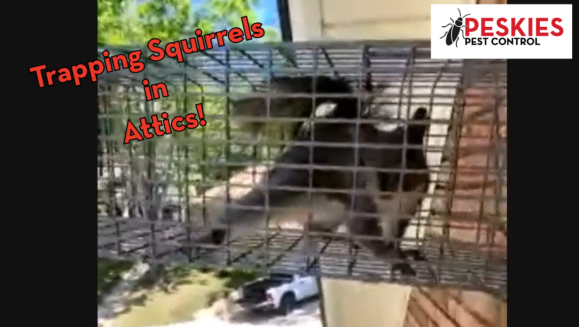
Michael Wienecke: I’d rather have rats. Definitely. I mean not not inside my like for me to have to do it inside my home or have to deal with I would rather deal with rats ’cause squirrels always go up high it’s just they’re just an inconvenience. Anyway let’s talk about some things that homeowners need to know like do’s and don’ts, um, you know size of the trap. Pretty important thing to talk about because I have I have gone on some pretty, uh, larger infestations and pretty hard to control problems where the customer’s just using way too small of a trap.
Travis McGowin: Well you know we see that a lot in in any of our wildlife or rodent work that we do. Take take mice and rats for an example. If you’re trying to trap a rat with a mouse trap the rat’s not going to get caught they’re going to take the bait and they may, you know, set the trap off and there’s you’re never going to catch anything. And the story’s the same with with using a rat trap to try to catch a mouse. Um, you you have too large of a trap, there again, they’ll set it off, they won’t get caught, they’ll take your bait. And and I think that that holds true to a lot of different wildlife. An improper sized trap causes a problem, um, you there’s just too much room for error there. And then not only an improper sized trap but even maybe say a live trap that’s not stabilized. What what issue does that have?
Proper Trapping and Tree Maintenance
Michael Wienecke: Right. And we talked about that in that video. You know squirrels aren’t just going to jump on something or any any animal really is not going to jump on something that’s kind of shaky, um, it’s going to feel it out and and squirrels are very cautious. They’re kind of like deer stop, look, stop, look, stop, look. I mean I couldn’t imagine the stress that is under one of those little guys just walking around in the in the daytime.
Travis McGowin: Just existing.
Michael Wienecke: Yes. Just existing. So they are, you know, that enjoy it but again they just they just wreak havoc in in homes and, uh, cause a lot issues. So let’s talk about some other things, um, you know, cutting the branches away from the home to where those guys have not not stopping them completely from getting on the roof but, uh, kind of giving them a little bit to think about. You know a a four foot jump to a ten foot jump is is a little bit more to think about, you know, in in size or in size.
Travis McGowin: Yeah and I mean they’ll they will jump a long ways to get where it is they want to go. I don’t know if you’ve ever sat in the woods and just, you know, watched squirrels jump from tree limb to tree limb, but there’s some very gutsy moves going on there sometimes, um, you know you’re really intrigued by the fact that they were able to launch themselves through the tree to grab another limb in a different tree through the air and, um, but that rings true for your house if if your limbs are overhanging or if they’re touching, uh, the roof of the house the squirrels have no problem, no fear in using that as a bridge or a crosswalk to get to your home. They’re they’re going to do it. They’re going to use it and they’re not going to be fearful of it at all.
Home Maintenance and Tree Placement
Michael Wienecke: Well and not to say that, you know, you need to go out and cut all these tree branches away I mean it’s definitely a good rule of thumb but again like that video we showed with the the chimney going up, I mean they’re still getting on the roof so the best course of action is going to be to seal up that home. Um, Travis has got the pound of, you know, pound of proof for for a lot of action. So I mean just getting making sure that you’ve got those entry points, you know, in that wintertime or even before summer looking around your house, you know, we’re all doing, uh, yard work looking around your house hey do I have rotten spots here, do I have this here. A lot of preventative maintenance, uh, goes a long way.
Travis McGowin: Well one I see very frequently, uh, is crepe myrtles. Man, oh yes. People love ’em, they plant ’em right next to the house and then they do not manicure them properly and these things end up growing way up past the roofline and then a lot of times, um, they’ll be touching the eave and man we had someone with a significant significant rat infestation. It was a duplex and they literally had rats climbing up the trees that had just grown up against the side of the house and into the eaves and tore a hole in the eaves and man rats were going in and out between the two units at the duplex we caught over 50 rats. So squirrels are no different. They’re going to be opportunists. They’re going to climb those trees and if you’ve got a tree that has done some, you know, some damage by growing into the side of a structure, uh, they’re going to I mean they just made it easy for ’em, you know, you gave ’em access, uh, a way to climb up and you gave ’em access into into the roof immediately.
Michael Wienecke: What do you think the price of a crepe myrtle to buy and and plant is?
Travis McGowin: I have never priced one. The only thing that I have ever done is destroy one. Um, when we moved into the house we are in now there was one in the front yard, um, near the house and we cut it down. Um, so I have no earthly idea so enlighten me.
Michael Wienecke: Well I just say that ’cause I had a customer one time she said that those crepe mort- crepe myrtles probably cost her more in the squirrel damage and squirrel activity shed than ever putting them in next right, you know, planting them next to her house.
Travis McGowin: Oh absolutely. So I’m assuming what your customer was really kind of hinting at is that they weren’t worth owning were they?
Michael Wienecke: I personally I mean they’re beautiful trees don’t get me wrong and my wife loves ’em but just don’t put ’em next to your house. Like we had one way in my old house we have one way in the backyard. It was beautiful it bloomed like purple or red I think something like that and she loved it but nothing nothing touching the house. 37 feet away.
Travis McGowin: Uh, well that would be ideal but, you know, unfortunately most of the time that’s not possible. But realistically we like to say, you know, trim those branches back trim those trees back at least six or more feet away. That six foot mark is going to start to become a stretch for a squirrel. I’m not going to say that they wouldn’t try it, um, but no overhanging limbs over the roof of the house and, uh, try to get those things trimmed back away from eaves and the roofline at least six preferably preferably more. I would say eight to 10 feet would be even more ideal.
Michael Wienecke: Look 10 feet, a 10 foot fall I think that squirrel would hit the roof and probably forget what he was trying trying to do after that, you know, it’s it’s a bit of a drop.
Travis McGowin: I would. I would. But then again, you know, if you ever watch a squirrel try to cross the road and they, you know, they get out in the middle and then they hit panic mode they can’t decide if they want to go forwards or backwards, you know, I would question a 10 foot drop or a 10 foot jump but I don’t think they would. I don’t know it just, you know, it just depends on the level of craziness I guess from the squirrel.
Michael Wienecke: Well it’s kind of like jumping off that rock at the lake, right? It’s like once you you’ve committed so you you have no other choice but go you know they just spread their arms and their they fly.
Travis McGowin: Gravity takes its course.
Lessons Learned in Squirrel Removal
Michael Wienecke: Exactly. Exactly. Um, let’s see what’s another what’s another thing that customers need to, you know, if they’re going to try to tackle this themselves what’s some other failures, um, over the years that we’ve kind of figured out. Wrong bait, um, bait is an important one, um, the style of bait, you know, if it if something’s not working you want to try something else. Don’t just stick to the same thing.
Travis McGowin: Right, um, you know wrong trap size or style, wrong wrong bait, um, you know and don’t underestimate the intelligence of some of these animals. They didn’t survive and grow into vast numbers of populations like they have become, you know, by being stupid. So, um, so you know don’t don’t discount their intelligence in terms of, you know, you think oh I’m just going to go set this trap right here and they’re just going to wander into it. No, um, ideally ideally you want to put those traps in a known runway, um, where where the rodent is known to go where the wildlife’s known to go. Obviously, you know, if you had a Connibear trap or something like that you you could have multiple accesses into your house. I mean if you put it over an access or a hole where the rodent is not using that access well you’re not going to catch nothing. So, you know, you’ve got to put it where they’re going to be where they’re going to run, um, and don’t underestimate the fact that they may avoid it for a while. Case in point I had a live trap in an attic back in Montgomery a while back, this been a couple years ago and it took multiple days to catch the little guy. And eventually I did but it took multiple days and multiple adjustments before we were successful in in catching that gray squirrel.
Michael Wienecke: Yeah it can take a lot of time. Um, another thing too I’ll say is that not like you said I’m glad you said that about the traps. So not just putting one trap up there sometimes you may need two traps sometimes you may need three traps. Um, another thing is that for the people that do not want to do it themselves how many traps do we have that for squirrels? How many different? How many diff- different traps?
Travis McGowin: I I don’t I don’t even know.
Michael Wienecke: We have one-way door traps, we have one door traps, we have two-door traps.
Travis McGowin: I even have some that have openings on both sides.
Michael Wienecke: Yeah, I was going to say then we have the runway door traps so we’re very ill- we’re very well equipped to deal with different situations inside the home or outside the home.
Travis McGowin: Right, right, yeah there’s there’s all kinds, pick your poison I guess but, uh, there again sometimes you have to back up and punt, sometimes you have to try things, if something doesn’t work and you have to, you know, try a different style, try a different placement. Um, you know even sometimes you if you were to even put a game camera up there and watch what’s going on even sometimes you may come extremely close to catching one and there again we talked about trap stability and they get halfway into the trap and something’s not stable and then they just back out and leave and then they don’t want to touch it again and that’s, you know, it’s frustrating and it comes along with it so trial and error sometimes and learning to pivot and swap into something different is is kind of the norm with some of these, you know, wildlife jobs that we go on.