Michael Wienecke: How hot has it been outside?
Travis McGowin: Can you… can you say expletives on here?
Michael Wienecke: It’s been… Well, I think you can say hell on here. I mean, it’s—that’s a—that’s a fair one. That’s a fair one.
Travis McGowin: Is the… is the devil’s armpit a good enough analogy?
Michael Wienecke: Ooh.
Travis McGowin: It’s uh… it’s pretty—it’s been pretty warm out here the last couple weeks.
Michael Wienecke: I will say, some of the places I’ve been to have also been stinky, so that’s fair. That’s fair.
Travis McGowin: Well, I mean, when you… when you are performing services and your clothes go from saturated to dry to saturated to dry over and over again multiple times, um… it’s… it’s pretty… pretty terrible.
Michael Wienecke: Yes. Yes, it is. So, today we want to talk about spiders, man. We are dealing with some just hellacious spiders. Spiders are everywhere.
Travis McGowin: Yeah, the… they are. Um, you know, and I understand that… I think you said you like spiders, right?
Michael Wienecke: Man, I love spiders. Spiders… spiders are one of the most beneficial insects in all…
Travis McGowin: Well, I agree with you in… in that regard. I think the… the vast majority of the population would heavily disagree with you in… in love of spiders, actually.
Michael Wienecke: Oh, I have a really awesome video of a spider jumping out of the couch and… and at me as I was videoing it. So, I’ll… I could send that to you if you want to pop it up there real quick.
Travis McGowin: The only way I want to see that is if you screamed like a girl.
Michael Wienecke: I screamed like a grown man.
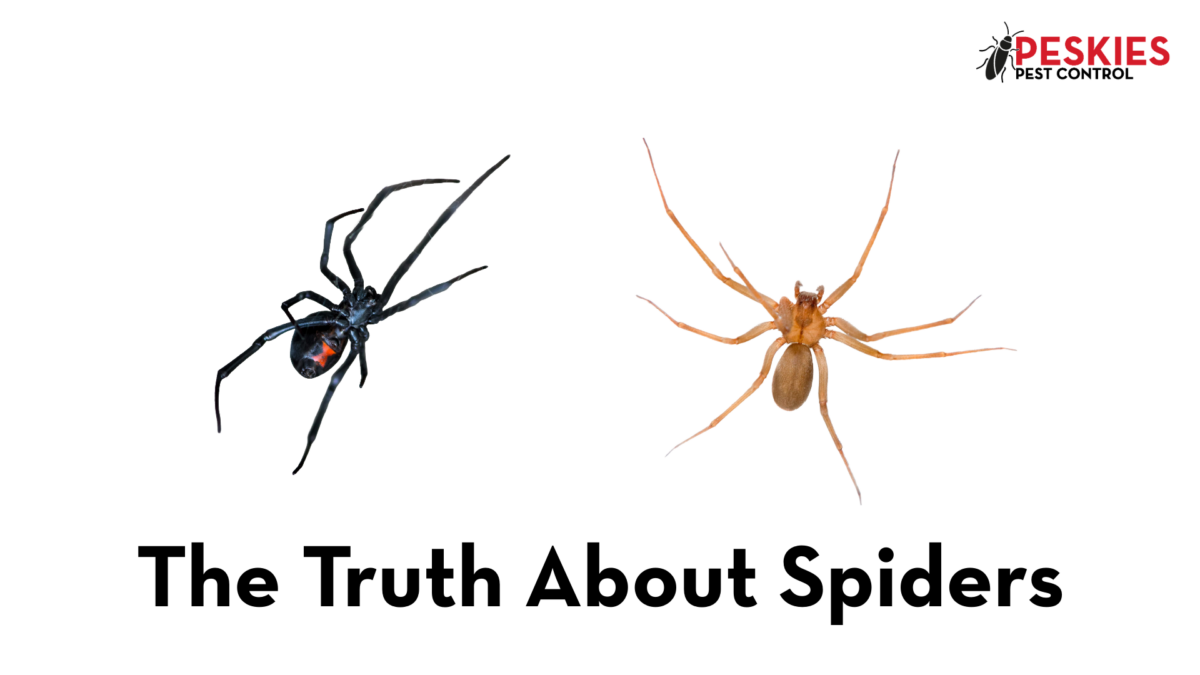
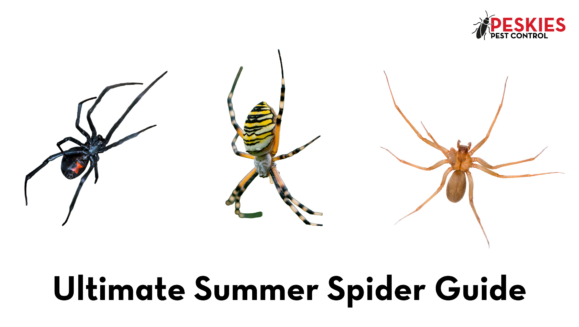
Travis McGowin: No, the… you know, spiders, obvious—obviously, you know, you’ve got the vast majority of them being very beneficial, the vast majority of them are not venomous, and most of them, you know, don’t even bite. Of course, you know, here in Alabama, most folks, when they think of spiders, their… their brain automatically jumps to one of two, you know, either being the black widow or the brown recluse. And, you know, in my encounters in pest control, the vast majority of spiders that you encounter are neither one of those two spiders.
Michael Wienecke: It is so rare to see a brown recluse or… or a black widow. I mean, if you stick your finger in a… a hose pipe or a crack or crevice outside, or just start picking up logs without… without gloves on, you’re probably going to meet a brown recluse or a black widow. But nine times out of 10, it’s going to be a… a wolf spider, excuse me. I lost my… my train of thought… thought there.
Travis McGowin: Yeah, but I think most… I think most people, uh, automatically put spiders into this… this dangerous box. Um, now granted, there was… there’s a kind of a funny story. When I was a teenager still living at home with my parents, our… our house had always had this like darker-colored brown carpet. Um…
Michael Wienecke: So, it… so, it didn’t show stains!
Travis McGowin: I… I mean, I wouldn’t go that far. Uh, but it always had this dark brown carpet, and of course, what color is a wolf spider? Dark brown. Dark brown with black on it, you know, so uh they blended really well. And I remember there was one… one evening where I had went into my bedroom and uh and walked in to the doorway and turned the light on, and there was this massive wolf spider, uh, standing essentially in the doorway. And of course, I think I scared the wolf spider just as much as the wolf spider kind of scared me and startled me, because I wasn’t expecting there to be this massive spider. And uh so when I turned the light on, the spider came running directly at my feet, which I didn’t have any shoes on or anything, and uh so I picked up, you know, kind of jumped, picked up my foot, and the spider’s still running towards me. And when my right foot came down, the foot came down right directly on top of the spider, and uh of course, you know, I came down on the floor and then immediately picked my foot back up. Well, my… the spider had actually curled up and went underneath the… the little gap between my toe and the beginning of my actual part of my foot in that little, you know, raised area where your toes are, and he balled up…
Michael Wienecke: They are survivors. They are survivors.
Travis McGowin: Yeah, he did. So, he balled up, and then as soon as I picked my foot back up, he popped his legs out and scurried, you know, scurried off. And of course, then I hunted him down with a vengeance and killed him. So, uh, yeah, I… I mean, I wouldn’t say that I’m a huge spider fan. About the only spider that I actually am kind of fascinated with and will actually usually let live, I really… I really like the garden spiders, the… um the garden spiders…
Michael Wienecke: The orb… the orb weavers and stuff?
Travis McGowin: Um, the orb weavers are… are in my opinion kind of annoying. Um, you know, they’re usually going to attach themselves up in a corner on the side of the house, come out at night, make this ginormous web, and then go and hide during the daytime.
Michael Wienecke: But they’re beautiful.
Travis McGowin: They are, but they make a mess on the side of your house, which I’m not real thrilled with. Um, but…
Michael Wienecke: Let’s talk about that for a minute. So, they make a mess on the side of your house. They build a big web, right?
Travis McGowin: Yeah. Every night.
Michael Wienecke: And that protects against what?
Travis McGowin: Insects.
Michael Wienecke: Every single flying insect.
Travis McGowin: Yes. Yeah, and… and you’re right. Um, so… so, spiders in… in that regard are… are, you know, of course, very beneficial. Obviously, they have uh… they have a purpose in the world, for sure. Whether or not most people agree with that, you know, that’s a totally different story, so…
Michael Wienecke: Well, and that’s… that’s kind of the what this… this talk was about. I mean, we remove spider webs around the house. It’s… it’s more of a vanity thing, I would say. You know? Most people do not want spider webs around the house. However, with the 105-degree heat, we’ve had extra, extra, extra spider webs around people’s houses.
Travis McGowin: Right. You know, I understand they… they make… they make a mess. Of course, they’re being, you know, more opportunistic. They’re… they’re finding a place where bugs are going to frequent, whether that’s close to an exterior light, um, you know, that’s going to attract bugs that they can catch and… and subsequently eat after that. So, they’re, you know, they’re being opportunistic. Uh, I… I do totally agree that they have their place in nature. I mean, you could look at a lot of insects, uh, take termites, for example. I mean, in nature, termites have a very important job. We just don’t want them in our house, eating our house, you know. They need to break down old, decaying wood and return it to the soil and all those good things. Uh, the one I don’t understand is a… a mosquito, but that’s a totally different topic. We won’t… we won’t dive off into that one. I… I still don’t understand the point and purpose.
Michael Wienecke: Of a mosquito?
Travis McGowin: Yes.
Michael Wienecke: I mean, bats love ’em.
Travis McGowin: Yeah, I understand, but if there’s one insect that exists only to feed bats, I think we can do without them. Bats eat a lot of other things, too.
Michael Wienecke: I mean, getting way off topic, but don’t bat guano and isn’t that a pretty helpful thing for the whole food chain? I mean, I think you’re… It’s like you step… You go in the primordial soup, you step on a flower, and everything’s different when you get back. So, you know, you have to… You have to be careful on what you wish is gone and… and here.
Travis McGowin: But… but no, I mean, spiders are going to be opportunistic, you know, whether they’re… they’re a spider that… that builds these big, elaborate webs, like you said, the orb weavers, or… or here in Alabama, uh, over the last several weeks, we’ve really had an uptick in what, you know, people call the banana spiders. Um, you know, that you’re inadvertently going to walk face-first into their web, and, you know, they’re… they’re like this big. Um, you know, they’re gigantic, and… and, uh, of course, the webs are really, really strong and sticky, so it’s a picture forever to try to peel it off your face, and, you know, if you haven’t had a heart condition up to that point in your life, you will have a heart condition because, you know, having a spider that big in your face is probably not going to be a comfort zone for most people. Um, but, you know, some of the… some of the other ones, like we were talking about, wolf spiders, uh, especially if you don’t have your… your weather stripping towards the bottom of your… of your door sealed up really well, you know, they’ll sneak right through those little gaps, cracks, and crevices and get in. Um, the really fun thing about the… the wolf spiders being, you know, that they tote their babies on their back, and that can be kind of unsightly, too.
Michael Wienecke: Especially when you squish ’em.
Travis McGowin: Yeah, because you think you’ve done this good thing, you squished this big, nasty-looking spider, and then all of a sudden, little teeny-tiny babies go crawling everywhere, and then it’s just like a big stomping spree all over the, you know, the place until you feel like the floor’s not moving anymore. So, yeah. But I mean, people need to understand, too, that… that infestations of spiders, um, are not… are not really all that common. I think, Michael, you’ve dealt with some uh brown recluse infestations before in some houses. I mean, in… am I incorrect there?
Michael Wienecke: I think in 10 years, I’ve done serious, serious brown recluse infestations maybe… maybe 10 or 20. And… and black widow, I’ve never seen a black widow infestation. I’ve seen a brown widow infestation. I think you have, too.
Travis McGowin: Yes. Yeah, I have seen some pretty significant, um, mainly around the exterior of the house, but I have seen some pretty significant, um, brown widow issues. Uh, had a house in particular that I… I counted roughly 60 to 70 brown widows that I killed around the outside of the house, between just being on the exterior, uh, of the structure itself, being on furniture on the back porch, um, and… and that was pretty significant. But I think the 3 months later at the next quarterly treatment, I came back and I think I found three.
Michael Wienecke: That’s awesome. Yeah, I had one out in Attalla. Attalla, we still… we still service him, and I was doing a termite inspection, and every… it was built with cinder blocks, and every cinder block had a brown, uh, repeat… I’m sorry… a… a brown widow in it.
Travis McGowin: Well, you know, the brown widows are… are like this, I guess, kind of offshoot of the black widow. Um, they’re not nearly as poisonous or anything like that. It’s probably going to be painful if they bite you, but I don’t think it’s going to be one of those things where it likely sends you to the hospital like a black widow probably would. Uh, but they’re terrible at hiding. You know, the… I always said like the… the brown widow, I think, is the black widow’s really, really dumb cousin that doesn’t, you know, pick great hiding spots, because a black widow genuinely, I feel like, does not most of the time want to be found. The brown widow… the brown widow will literally like weave this little web like right there in your face, um, and… and like hi- trying to hide in plain sight, and they’re just not great at that.
Michael Wienecke: Yeah, I mean, a black widow bite, that… it all comes from just sticking your hand in a crack or crevice that, you know, one’s in, and it’s just… it’s biting you out of… out of fear.
Travis McGowin: Absolutely. Yeah, most of the time, like I said, they don’t want to be found. Um, especially brown recluse, too. I mean, the vast majority of the population could probably count on one hand, maybe, how many times they’ve seen a… a genuine brown recluse in their life that… that was actually that spider and not a confused breed, you know, mistaking a wolf spider or a southern house spider or… or something like that, uh, for a brown wid- uh, a brown recluse instead.
Michael Wienecke: Well, and I’m sure, you know, other states and… and stuff like that, and even other cities, but here in Birmingham, you know, the Birmingham metro, I mean, I… I don’t see many brown recluse.
Travis McGowin: Right. So, let’s talk a little for just a second. What can… what are some things that customers themselves at their properties can do? Obviously, these are, you know, we look at them like wild animals, but wild insects, if you will, they… they… they’re not going to abide by a rule that we set or anything, but what are some things that customers can do to attempt to either, you know, lessen the pressure that spiders put on their house or lessen the activity that spiders, you know, uh, have around the outside of their house and then subsequently getting inside their house?
Michael Wienecke: So, step one, uh, do not buy a lake house.
Travis McGowin: Absolutely! Absolutely. Your… your docks, your exterior of your house is going to be covered a lot.
Michael Wienecke: There is… there’s not a… you know, just joking aside, but there is not a single lake house that we don’t see that it just… it’s every… you can move it, you can de-web it, you can… you can spray it, you can treat it, a week later, they’re right back because you have so many flying insects around those lake houses. Um, and they just kind of become part of the house.
Travis McGowin: Yeah. Like I said, they’re… they’re acting as nature… A decoration. A decoration. Yeah, if you’re ready for Halloween and, you know… Um, but they’re acting as nature intended them to act. I mean, they’re… they’re trying to survive, and they’re, you know, trying to lessen the insect population. Um, but another one that comes to mind for myself, and this can be pretty prevalent in the lake houses, but just houses in general, is the use of exterior lighting on your house.
Michael Wienecke: Oh, that’s a big one. That’s for any… roaches, um, any kind of a… a nocturnal type of flying insect is going to come towards your house. I mean, termites. Termite… You see it in Louisiana all the time, you know, these termites are just swarm in these lights.
Travis McGowin: Absolutely. Um, so, we… we highly advise people, uh, cause I think, Michael, you could probably tell—say this, too, but people who leave their exterior lighting on on their house all evening, all night long, through the night into the morning time, you’re… you’re going to have a significant amount of pest pressure and spider pressure more than you would if you turned them off. Now, there’s going to be… there’s going to be some things you can’t prevent. For example, uh, light that bleeds through the window to the outside of your house at night, I mean, obviously, you can put up blinds and curtains and try to minimize that, uh, but ultimately, it’s going to be hard to prevent any light from escaping the… the from the inside to the outside of your house. But ensuring that your floodlights and your different light fixtures on the outside of your house, your porch lights, those types of things are turned off is going to probably be a pretty big help in lessening that pest pressure on your house.
Michael Wienecke: Well, and also check your windows. You know, I can’t tell you how many customers will go around and see a… a window from the… from the top slid down, and their window’s unlocked, and they don’t even know it. And I’d imagine it’s because of the pressures in the home, and it’s just pushing that window open a little bit, but we see it all the time. Um, so that would be a big one, too.
Travis McGowin: Absolutely. And then, of course, you know, spiders are obviously looking for things to eat. That’s, I mean, that’s how they survive. So, limiting, I would say, too, limiting the amount of insect harborage areas around the outside of your house, right there directly around your house, in your flower beds, and… and those types of areas is probably going to also help limit the amount of spider pressure that you have, because anywhere that insects can hide, obviously, spiders are kind of praying on those other insects, uh, so anywhere that you have that these insects can hide or live and make this little insect community, if you will, it’s going to be a place where a spider goes, “Oh, well, I’m going to go get, you know, lunch or dinner.” So, I think that would be helpful, too.
Michael Wienecke: Well, and let’s talk about, you know, the landscape, too, because if you are in Greystone, for instance, or Chelsea, so, you know, a big, wooded area, um, I… that’s just kind of what’s coming to my mind right now. Uh, just a big, wooded area, and your house is on the backside, you know, of just this big, wooded, tall trees, I mean, these… these spiders balloon, and I’ve seen it. It’s… it’s amazing. They’ll… they’ll parachute… they’ll parachute right out of these trees, right onto your house, and it’s… it’s just… it’s nature’s cool way of, uh, spreading… spreading, you know, the love from house to house, to tree to tree, but…
Travis McGowin: Have you seen the… the images… I think, uh, you know, and it may just be a sensational AI-generated photo, but I think this was kind of going around before AI was really, uh, taking over. Um, but have you seen the videos, I think from Australia…
Michael Wienecke: Man, so sad that we have to… I have to question…
Travis McGowin: I know, right? You question everything you see, because half of it’s not even real, but… Um, have you seen the videos that people have posted of like when the spiders all come out in some of the other countries where they’re just covering like everything?
Michael Wienecke: Yes, in Au- are you talking about Australia where they’re just… the webs are just covering the whole field?
Travis McGowin: Yeah, I… I do not need to go there at any point.
Michael Wienecke: You know, I feel like Australia has everything that will either kill you or just really, really irritate you.
Travis McGowin: I think that’s a proven fact. I may be wrong, but I think Australia has a higher number of deadly animals and insects per square mile than like any other country.
Michael Wienecke: I would… I would love to go… I would love to go to Northern… Northern Territory, though, because that’s… that’s as far off as you can get and see these 21-foot crocs and stuff. That’d be pretty cool.
Travis McGowin: And… and I’ll say this, uh, kind of in closing about the spider things. I know that people get frustrated, um, you know, you may call in your pest control provider, you may go to the store and attempt to purchase something that says it eliminates spiders and all that, and it doesn’t necess- and well, let me back up and say that you may feel like it doesn’t work or that it’s ineffective. But here’s the… the reality about the spiders. So, pesticides, if they contact a spider’s body, they can… they can kill a spider. But Michael, why are most pesticides ineffective against spiders based upon their biology and how they act?
Michael Wienecke: Well, they’re just really high off the ground. I mean, simple as that. So, they’re not getting that full… that full contact. Um, they’re just really high off the ground. I mean, a dust is going to be the best… the best course of action, um, an aerosol, something of that nature. But really, treating those cracks and crevices just… just like we all talk about. Um, you know, back to the outside, the water, the water, water, you know. It’s… it’s 105 degrees. There… there’s water everywhere, but not a drop to drink. So, wherever you’ve got, I mean, we’re seeing it all day long, and I don’t think people realize, but that… that little bitty, what is it, 1/2-inch PVC pipe that’s coming off the AC condenser, that thing is spitting out, what would you say, Travis? What would you say, 12 gallons a day or something like that?
Travis McGowin: Yeah, I… I mean, the way the weather’s been right now, it’s probably a lot more than that. I mean, the same reason why if you don’t make sure that drain is clean that it’s going to flood your, you know, house.
Michael Wienecke: Yeah, and…
Travis McGowin: It’s a significant amount of condensation coming from those.
Michael Wienecke: Right. So, I… I always try to, you know, point that out. We see it and just say, “Hey, kick that to a 90 or a 45 and get that as far away from your property as possible,” because that’s going to bring ants, that’s going to bring, uh, flying insects around that area at night, that’s going to bring, you know, all types of other insects that eat other insects, and then those spiders are going to come because of the flying insects.
Travis McGowin: And that’s one other thing that I like to… to share, too, with my customers is that not only are they higher off the ground so they’re less likely to make full contact with that product, but they also don’t groom themselves.
Michael Wienecke: Ah, yes. Yes, they do. They…
Travis McGowin: So, you know, a lot… like a lot of other insects, I know that it’s weird to say that roaches groom themselves, um, because we view roaches as, you know, nasty little insects or nasty little creatures, but they do, you know, scurry along and… and trek through things, you know, specifically pesticides that are put out, and then, you know, further damage themselves or harm themselves by grooming themselves, and spiders don’t do that. Uh, so even if their little feet did cross a barrier or touch, the likelihood of them ingesting or really coming to enough product that could hurt them is going to be slim to none. So, it’s going to be a lot harder to, uh, be effective against spiders by just like sprays alone. That’s why I’m glad you mentioned about dusts and aerosols and different tools that pest control companies have at their disposal, um, because sometimes just praying and spraying like some folks do is… is not going to be adequate to solve a spider problem.
Michael Wienecke: It’s… it’s funny you brought up the dust thing. Um, somebody put an ad out saying it was a new product, and, um, that they didn’t have to… No, they had no longer had to, uh, spray around the house. They could just Delta dust every crack and crevice, and it was brand new. Brand new product. Hot on the market, baby! Hot on the market!
Travis McGowin: It’s been out for years. Hey, well, you know, whatever… whatever ploy you need to sell your product, you know. Um, sounds a bit like someone trying to sell the wheel, you know. Let’s put these amazing new round things on our car to drive. Uh, yeah, I think pretty sure tires have been round since cars were invented back in early 1900s, so…

Pingback: From Wolf Spiders to Recluses: Your Ultimate Summer Spider Control Guide - Peskies Pest Control