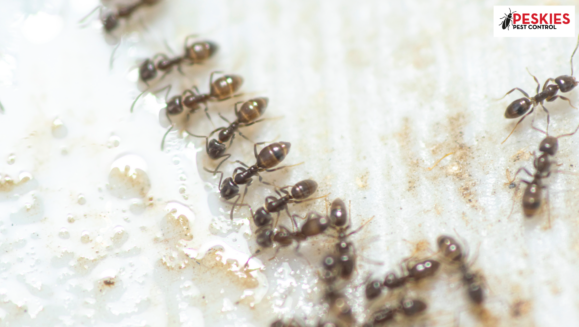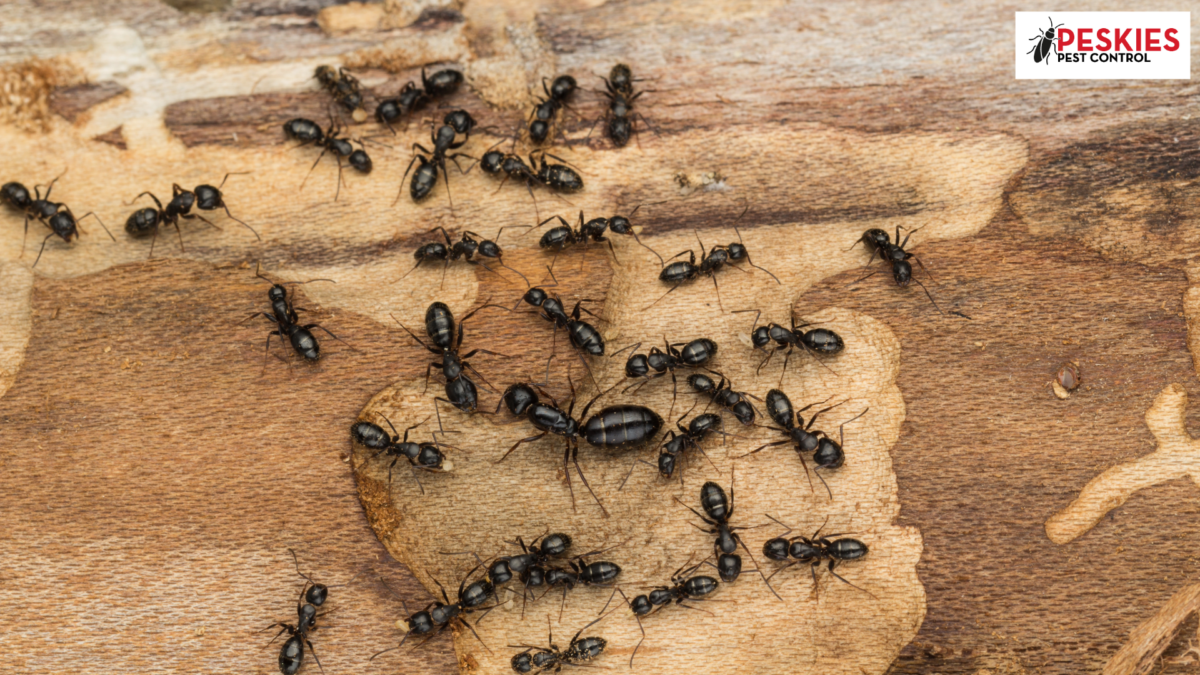
From the historic charm of Forest Park to the wooded landscapes of Mountain Brook and Shelby County, residents across the Birmingham area know that our lush Alabama environment is a prime habitat for pests. Among the most destructive are Carpenter Ants, named for their habit of hollowing out wood galleries for nesting.
Whether you are in Hoover, Vestavia Hills, Homewood, or Trussville, understanding these pests is the first step to protecting your property.
Is It a Carpenter Ant?
In the Birmingham area, we primarily deal with the Black Carpenter Ant.
You can identify them by these specific physical traits:
Size: Workers are polymorphic (variable sizes) ranging from 1/8″ to 1/2″.
Queens: These can reach up to 5/8″ in size.
Thorax: They possess an evenly rounded profile with no spines.
Antennae: Their antennae are 12-segmented with no club.
Pedicel: They have a 1-segmented “waist” node.
Defense: While they lack a stinger, they can deliver a painful bite and spray formic acid into the wound.
Warning Signs for Birmingham Homeowners
Because these ants are nocturnal—with peak foraging activity between 10 pm and 2 am—you might not see them during the day.
Keep an eye out for these red flags:
Winged Ants: Seeing “winged ants” indoors between May and August is often the first sign a homeowner notices.
Frass: Look for sawdust-like shavings, insect body parts, and insulation fragments expelled from “windows” in the wood.
Smooth Galleries: They leave behind clean, “sand-papered” walls that follow soft spring wood.
Sound & Touch: Listen for a “rustling sound” in the walls or use the “drumming test” by tapping wood members to see if they sound hollow.
Why Over-the-Mountain Properties are at Risk
Carpenter Ants do not actually eat wood; they scavenge for sweets, grease, meat, and insect honeydew. However, they love wood softened by moisture or fungus.
Our local humidity makes wall voids and insulation prime real estate for Satellite Nests. While a parent colony typically lives in decayed wood like stumps or dead trees outdoors, satellite nests allow them to expand deep into your home’s structure.
Protection Strategies for the Magic City
To keep your home safe, Peskies Pest Control recommends these preventative steps:
Eliminate Moisture: Fix leaks to prevent future infestations, as moisture is the enemy.
Landscaping: Trim all tree branches and shrubs away from the structure to remove “ant highways”.
Seal Entry Points: Caulk gaps where utility lines (water/electric) enter the home.
Professional Perimeter Defense: We apply non-repellent pesticides like Termidor SC around your foundation and siding junctions to ensure the entire colony—not just the foragers—is eliminated.
If you suspect an infestation of Carpenter Ants in Birmingham AL or the surrounding areas, don’t wait for structural damage to occur. Contact Peskies Pest Control at (205) 470-8161 today for a professional inspection!